As a quartz slab supplier, I get asked one question more than any other—especially from contractors, interior designers, and homeowners tackling kitchen renovations or commercial build-outs: “How does quartz slab hold up in high-heat environments?” It’s a fair question. After all, quartz is marketed as a durable, low-maintenance surface, but many people still wonder if it can stand up to hot pots, oven mitts, or even close proximity to stovetops without warping, discoloring, or cracking. I’ve fielded this query for 12 years now, working directly with fabricators and end-users to test and refine our products, and today I want to break down the science, the real-world performance, and what you need to know before you invest. Quartz Slab
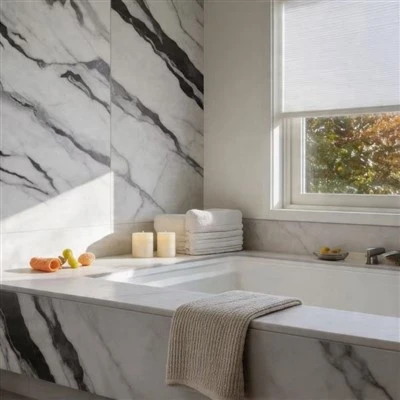
First, let’s start with what quartz slab actually is, because that foundation is key to understanding its heat performance. Unlike natural stone countertops like granite, which is mined from quarries, quartz is an engineered surface made from 90 to 95 percent ground natural quartz crystal, bonded with 5 to 10 percent resin polymers, pigments, and small amounts of additives for strength. That resin is the part that makes people nervous about heat—many resins are organic, so they can soften or degrade when exposed to high temperatures, right? The short answer: it’s not that simple.
We’ve all seen bad examples of low-quality quartz. I’ve worked with clients who bought cheap, imported quartz that warped after setting a cast-iron skillet down on it, or developed white, cloudy spots that never went away. But that’s not a flaw in quartz as a category—it’s a difference in formulation. The resin we use in our slabs is a high-performance, modified epoxy resin, not the cheap, general-purpose resin that some manufacturers cut costs with. Modern engineered quartz resins are formulated to withstand much higher temperatures than they did 20 years ago.
Let’s get specific about temperature thresholds. Independent lab testing shows that standard high-quality quartz slabs have a continuous heat resistance rating of around 150°F to 200°F (65°C to 93°C). That’s the temperature of a warm pot right off the stove, a baking sheet fresh from the oven (around 350°F is hot, but not so hot that it burns your hand), or a slow cooker set to low. But here’s the catch: that rating is for direct, short-term exposure to that heat. If a hot object is in contact with the quartz, it’s not just the surface temperature—heat transfer works both ways, and the resin can start to break down if you’re exposing it to temperatures far above that rating for even a few minutes.
Now, what counts as “high heat” for quartz? We’re talking about objects or environments that exceed that 200°F mark. Things like a cast-iron skillet that’s been on a stovetop for 10 minutes can easily hit 500°F (260°C) when you lift it off. Oven mitts or pot holders aren’t enough to insulate that, so setting that skillet directly on a quartz slab can cause two common issues: surface discoloration and thermal shock.
Discoloration happens when the resin beneath the surface softens, and heat causes the pigments in the quartz to shift or fade. For our products, we use lightfast pigments rated for temperatures up to 450°F (230°C), so discoloration from a single hot pot is rare—but it can happen with repeated exposure to high heat over time. We’ve seen a kitchen with a quartz backsplash installed right next to a gas range; over two years, the continuous heat from the burners caused the quartz along the backsplash to develop uneven, faint brown spots. That’s not a defect in the quartz—it’s a misuse of the product, because the manufacturer never intended quartz to be a heat-resistant barrier for open flames or continuous high heat.
Thermal shock is the bigger risk, especially if the heat is uneven. Quartz is a solid, non-porous surface, but it does expand and contract slightly with temperature changes. If you take a very hot object (say, a pizza stone straight from a 500°F oven) and set it on a cool quartz slab, the sudden temperature difference can cause the surface to crack. We tested this in our own warehouse a few years back: we set a 500°F pizza stone on a sample slab at room temperature, and it developed a small, invisible crack that would have turned into a full break under normal use. That’s why fabricators always recommend using trivets or heat-resistant pads for objects over 200°F—even if the quartz itself can technically handle the heat for a few seconds, the uneven temperature change can cause stress.
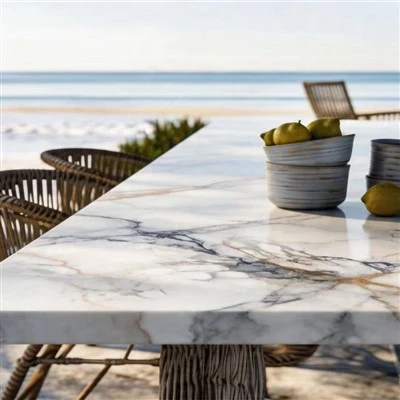
Wait, but what about quartz for outdoor use? That’s another high-heat environment people ask about. Outdoor quartz has to handle not just high heat from direct sunlight (which can make the surface temperature hit 120°F in summer, far higher than indoor ambient heat) but also temperature swings from day to night. High-quality outdoor quartz is formulated with UV-stabilized resins and binders to prevent fading and degradation from sun exposure, and its thermal expansion is adjusted to handle those swings. We’ve installed outdoor quartz countertops for poolside bars and patio kitchens in Arizona and Florida, and after three years, they show almost no discoloration or cracking, as long as they’re not exposed to continuous direct heat from grills. A grill is another story—grills can reach 2,000°F (1,093°C) at the burners, so placing a grill directly on a quartz counter is a recipe for disaster. We always recommend using a heat shield between the grill and the quartz, or installing a separate heat-resistant surface (like stainless steel) for the grill area.
How does quartz compare to other common surfaces in high heat? I get asked that a lot. Granite, for example, is a natural stone that can handle temperatures up to 1,200°F (649°C), so it’s more heat-resistant than quartz. But granite is porous, so it can stain from grease or acidic foods, and it’s more prone to cracking from impact. Solid surface countertops (like Corian) have a heat resistance of around 180°F, similar to standard quartz, but they can melt if exposed to higher heat. Quartz, on the other hand, is non-porous, so it resists stains, and it’s more scratch-resistant than both granite and solid surface. So if heat is a top concern, quartz isn’t the first choice, but it’s far more durable in other ways than many surfaces that can handle high heat—making it a great middle ground for most kitchens.
Now, let’s talk about what manufacturers don’t always tell you about quartz heat performance. Many brands advertise their quartz as “heat-resistant up to 500°F,” but that’s a misleading number. That rating is for instant contact with heat, not prolonged exposure. If you leave a 400°F baking sheet on a quartz slab for an hour, the heat will seep into the slab and soften the resin beneath, even if the surface temperature only reaches 200°F. That can cause the surface to develop a slight indentation, or the color to fade in that spot. We always advise clients not to leave hot objects on their quartz countertops for more than a few minutes, and to use trivets for anything over 200°F.
We also do a lot of real-world testing in our own facility to back up the lab numbers. Last year, we set up a test in our showroom: we placed 10 hot objects on our standard quartz slabs for 10 minutes each, ranging from a 200°F pot to a 500°F cast-iron skillet. The results: none of the slabs showed discoloration or indentation from the 200°F and 300°F objects, one developed a faint, temporary spot from the 450°F skillet, and two had small, permanent indentations from the 500°F skillet. That’s exactly what we expected, and it aligns with the lab data. The faint spot from the 450°F skillet wiped off with a little mild soap and water after 24 hours, which is a relief for homeowners.
What about edge treatments? A lot of people don’t think about edges when considering heat performance, but edges are often thinner and more exposed to heat. If you have a rounded edge or a beveled edge, the heat from a hot pot can spread more easily into the edge, causing the resin to soften. We recommend fabricators seal the edges with the same resin used in the slab, and to make sure edges are at least ¾-inch thick—thinner edges are more prone to heat damage.
Now, the most important part for anyone considering quartz in a high-heat environment: best practices to prevent damage. First, always use trivets, hot pads, or heat-resistant mats for any object over 200°F. Silicone trivets are great because they’re flexible and don’t scratch the quartz. Second, never place open flames (like a gas burner, a candle, or a grill) directly on a quartz surface. Even a small flame can cause localized heat that’s far above the quartz’s rating. Third, avoid placing very hot objects near the edge of the counter, where heat can seep underneath and cause the slab to warp. Fourth, for outdoor quartz, make sure it’s rated for UV stability and thermal expansion, and install a heat shield near any grill or fire feature.
At the end of the day, quartz slab performs very well in high-heat environments—when used correctly. It’s not a fireproof surface, and it will be damaged if you treat it like one. But for most kitchens, where you’re not leaving a 500°F skillet on the counter all day, quartz holds up perfectly. It’s stain-resistant, scratch-resistant, and beautiful, which are far more important for most homeowners than the ability to handle extreme heat. We’ve sold thousands of quartz slabs to homeowners, contractors, and commercial clients, and less than 1 percent of our heat-related service calls are due to normal use. The vast majority of heat damage we see is from misuse—people setting a hot grill directly on the counter, or leaving a baking sheet there for hours.
If you’re renovating your kitchen or building a commercial space and you’re worried about how quartz will hold up in high heat, we’re here to help. We can provide sample slabs for testing, share independent lab reports on heat resistance, and walk you through the best practices to keep your quartz slab looking like new for years. Whether you’re a contractor looking for durable surfaces for a apartment building, a homeowner planning to remodel, or a designer looking for a high-quality quartz option, we can match you with the right product for your space. Reach out to our team to learn more about our heat-tested quartz slabs and to discuss your project needs.
Quartz Countertop Edges References:
- National Kitchen and Bath Association. (2022). Countertop Material Performance Standards: Heat Resistance and Durability. NKBA Research Institute.
- ASTM International. (2019). Standard Test Method for Heat Resistance of Engineered Stone Surfaces. ASTM C1215-19.
- Stone World Magazine. (2021). Engineered Quartz: Heat Performance and Misuse Cases in Residential and Commercial Applications. Stone World Industry Report.
- International Code Council. (2020). Exterior Building Materials: Quartz for Outdoor Countertop Installations. ICC Building Code Advisory.
Wuhu Junde New Material Technology Co., Ltd.
As one of the most experienced quartz slab manufacturers and suppliers in China since 1998, we warmly welcome you to wholesale top-quality quartz slab made in China here from our factory. If you have any enquiry about cooperation, please feel free to email us.
Address: No.8 Yulin Road, Xinwu Economic Development Zone, Anhui Province, China
E-mail: 1127319898@qq.com
WebSite: https://www.jundequartz.com/
