If you’ve ever spent a weekend trying to trim overgrown tree branches with a wobbly ladder and a pair of loppers, only to end up sore, frustrated, and one wrong step away from a trip to the ER, you know how big of a difference the right equipment makes. As a boom lift supplier, I see this every single day—contractors, landscapers, even homeowners who try to cut corners on tools before they realize: boom lifts aren’t just for construction sites. They’re a total game-changer for tree trimming, and I’m here to break down why they’re not just a luxury, but a smart, safe investment for anyone working at height in the yard or on a job site. Boom Lift

First, let’s cut through the jargon. A boom lift is basically a movable, telescopic arm with a work platform on the end that lets you get up high—way higher than any ladder could ever safely take you. For tree trimming, that height is non-negotiable. Ladders max out around 30 feet (and even 30 feet on a ladder is sketchy if you’re moving around, reaching, or holding heavy branches). Most mature trees have branches that start 20 to 40 feet up, and some even go higher. I’ve had landscapers come to me last minute because a storm knocked a big oak branch onto a power line—they tried using a 28-foot ladder and couldn’t reach, so they had to call in a crew with a lift. If they’d rented or bought a boom lift first, that job would’ve been done in half the time, no stress.
Safety is the biggest reason we push boom lifts for tree trimming, and it’s not just about avoiding falls. Think about what you’re doing when you trim a tree: you’re cutting heavy branches, handling sharp tools, and if you’re near power lines (super common for residential trees), you need that stable, elevated platform to keep you far enough away from hazards. Ladders have a huge failure rate for this kind of work. OSHA has stats that show falls from ladders are one of the top causes of workplace injuries in landscaping, and trimming trees is one of the jobs where that risk is highest. A boom lift’s platform is enclosed (or at least has guardrails), it’s secured to the ground, and it lets you move side to side, up or down without repositioning a ladder every two minutes. I’ve seen guys trim a whole 50-foot maple in a day with a boom lift, and they said it took them three days doing the same job with ladders. That’s not just faster—it’s safer.
Wait, but do all boom lifts work for tree trimming? No, not really. You’ve got two main types here: articulated boom lifts (sometimes called “cherry pickers,” though that term’s usually for the older models) and telescopic boom lifts. For tree trimming, articulated is usually the way to go because those arms bend—they can reach around obstacles, like the side of a house, a fence, or even other tree branches. If you have a tree that’s close to your home, an articulated boom can get you right up to the overhanging branches without you having to stand on a ladder on your roof, which is a whole other dangerous scenario. Telescopic booms are better for straight-up height, like if you’re trimming a tree in an open field with no obstacles around it. We always ask customers what their specific job looks like before we recommend one—no sense in getting a 60-foot telescopic boom if you only need to reach 30 feet on a tree next to your garage.
Another thing people sleep on with boom lifts for tree trimming is their versatility. A lot of folks think you only use a boom lift for big construction jobs, but once you have one, you can use it for way more than just cutting branches. Washing second-floor windows, painting the exterior of your house, gutting a second-story addition (if you’re doing a remodel), even hanging holiday lights on tall trees. It’s not a one-and-done tool. I had a small landscaping company owner buy a 40-foot articulated boom from us last year—he told me he uses it for trimming trees in the spring and fall, gutter cleaning in the summer, and putting up commercial signs in the winter. That’s a way better return on investment than a ladder you’ll outgrow in a year.
Now, let’s talk about some common mistakes people make when using boom lifts for tree trimming. First, not checking the ground before you set it up. Boom lifts need a flat, stable surface—if you set one up on soft grass, it can tip, especially when you’re reaching far out to trim a branch. We always tell customers to clear the area of rocks, mud, or uneven ground, and if you’re on a slope, make sure the boom lift has the leveling features (most modern ones do) to keep the platform steady. Another mistake: overreaching. It’s tempting to stretch out as far as you can to avoid moving the lift, but that’s how you tip the machine or lose your balance. The rule of thumb is: never extend the arm further than the manufacturer recommends, and keep your weight centered in the platform (no standing on the railings, no holding tools out to the side super far).
For homeowners, there’s also the option of renting instead of buying if you only need it once or twice a year. We rent out small, easy-to-operate boom lifts that are perfect for residential tree trimming—no need for a special license to operate most of the smaller models (check your local rules, of course). I had a guy last spring rent a 30-foot articulated boom for trimming his huge pine tree that was blocking his solar panels. He said he tried using a ladder twice and got so nervous he couldn’t focus, but with the boom lift, he finished the whole job in 4 hours, and saved money on an expensive tree service quote. That’s the kind of win we love to see.
For professionals, though, owning a boom lift can make a huge difference in your bottom line. If you’re a landscaper or tree trimmer, time is money. The faster you can get a job done, the more jobs you can take on. We’ve had customers tell us that after they added boom lifts to their fleet, their revenue went up by 30% because they could bid on bigger jobs that require working at height, and they didn’t have to pay outside crews for that work anymore. Also, there’s less downtime from injuries—when your guys aren’t falling off ladders, you don’t have to cover medical costs or deal with workers’ comp claims. That’s a huge hidden cost that a lot of small businesses don’t account for.
Wait, let’s address a common question: is a boom lift too expensive for a small operation or a homeowner? It all depends on your needs. Smaller boom lifts for residential use start at a few thousand dollars, and rentals are usually $100 to $200 a day, which is way cheaper than hiring a tree service that can charge $500 to $1,500 for trimming a single large tree. For pros, we have financing options that make owning a boom lift manageable—no need to drop a big lump sum upfront. We also offer maintenance plans, so you don’t have to worry about fixing it if something breaks, which is a big plus for people who aren’t heavy equipment experts.
I want to be real here—boom lifts aren’t for everyone. If you have a tiny tree in your backyard that only needs trimming up to 15 feet, a ladder is totally fine. But if your tree is over 20 feet, or it’s close to power lines, or you’re doing this for a living, a boom lift is worth every penny. I’ve seen way too many people get hurt because they tried to save a few bucks on a ladder instead of investing in the right tool. Last year, a local guy here tried to trim a 40-foot oak with a ladder, slipped, and broke his arm and his collarbone. He told me he would’ve paid double for a boom lift just to avoid that. That’s the kind of story that makes me want to yell from the rooftops: don’t take shortcuts with height work.
Another thing: boom lifts are way more eco-friendly than traditional tree trimming methods. Old-school crews used to use chainsaws from ladders, and a lot of branches would fall in random places, damaging lawns or houses. With a boom lift, you can control where each branch falls, so you can move the platform carefully and lower branches to the ground safely. That means less cleanup, less damage, and fewer accidents. Also, newer boom lifts have electric motors that are way cleaner than gas-powered tools, so if you’re working near a residential area, you don’t have to deal with fumes or loud noise that bothers neighbors.
Let’s wrap this up. Whether you’re a homeowner with a overgrown tree, a landscaper looking to expand your services, or a tree trimmer tired of ladders, a boom lift is a solid choice. It’s safer, faster, more versatile, and in most cases, cheaper than the alternatives. If you’re curious about what size or type would work for your tree trimming needs, don’t hesitate to reach out. We can help you figure out if renting is the right call, or if buying makes more sense for your long-term projects. No pressure, just honest advice from someone who’s been in this game for years.
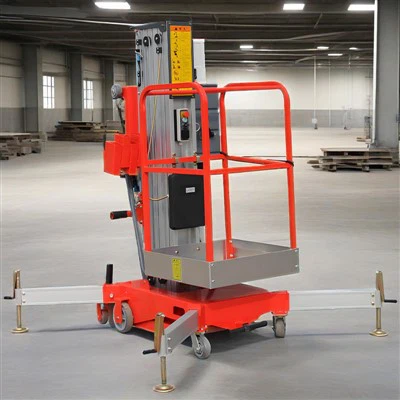
If you’re ready to make your tree trimming jobs easier, safer, and faster, get in touch with us to discuss your boom lift needs. We’ve got a range of models to fit any job, from small residential trees to large commercial projects, and our team can help you find the perfect fit. Let’s make your next trimming job a success—no ladder wobbles, no stress, just getting the job done right.
Home Elevators References
- Occupational Safety and Health Administration (OSHA). "Falls in Landscaping Work."
- International Society of Arboriculture (ISA). "Best Practices for Tree Trimming at Height."
- Equipment World. "Boom Lifts: Versatility for Landscaping and Tree Care."
- U.S. Small Business Administration. "Cost-Benefit Analysis of Equipment for Landscaping Professionals."
Qingdao Eterlift Machinery Co., Ltd.
Qingdao Eterlift Machinery Co., Ltd. is one of the most professional boom lift manufacturers and suppliers in China, specialized in providing high quality lifting platforms made in China. We warmly welcome you to buy cheap boom lift for sale here from our factory. For customized service, contact us now.
Address: Dongguzhen Industrial Park, Chengyang District, Qingdao, China
E-mail: sales@eterlift.com
WebSite: https://www.eterlifts.com/
