Hey guys, if you’re in the market for a rotary hammer, you’ve probably seen two types on the shelves: ones with brushed motors and those with brushless motors. As someone who’s supplied rotary hammers for over a decade, I get it—brushless tech sounds fancy, but you might be wondering, “Is it actually worth the extra cash?” Spoiler alert: for most tradespeople and serious DIYers, yeah, it’s a game-changer. Let me break down the real benefits that matter, not just the marketing jargon. Rotary Hammer
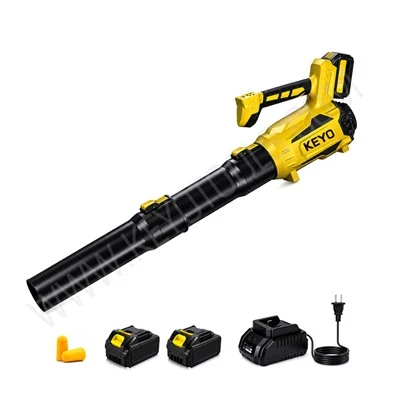
First, let’s cut through the basics. Brushed motors use carbon brushes to transfer electricity to the armature, right? Those brushes wear out over time, fraying and burning out after a few hundred hours of use. Brushless motors skip the brushes entirely—instead, they use electronic controllers to direct power to the motor’s stator coils. No more rubbing parts = less friction, less heat, and way longer life. For a contractor who uses their rotary hammer 40 hours a week, that means fewer repairs, no more mid-job breakdowns where you’re scrambling to borrow a tool from a buddy. I’ve seen guys go 5+ years on a single brushless rotary hammer with heavy use, versus a brushed one that needs brush replacements every 6 months. That adds up to serious savings in the long run.
Next up, power efficiency. Ever used a brushed hammer that felt like it was sucking energy out of your power supply? If it’s a corded model, maybe it trips the breaker every time you crank it; if cordless, it dies halfway through a job. Brushless motors are way more efficient because they don’t waste energy on that brush friction. They convert almost 90% of the electricity they use into actual hammering or drilling power, compared to 70-80% for brushed motors. Let’s use a cordless example: a 18V brushless rotary hammer will outperform a 20V brushed one, and run 30-40% longer on a single battery charge. For job sites where outlets are scarce—like a basement renovation or a remote deck build—That means fewer battery swaps, less downtime. I had a regular customer who’s a mason—he used to go through 4 lithium-ion batteries a day for his brushed hammer, now he uses 2 and still finishes the job. He swears by it, and so do I.
Don’t sleep on the weight and balance, either. Brushed motors have more moving parts, so they’re bulkier and heavier. A brushless motor’s compact design means the motor sits closer to the hammer’s head, not back near the handle. That shifts the center of gravity forward, which makes the tool way easier to control. I’ve had new guys pick up a brushless rotary hammer and comment on how it doesn’t feel like it’s pulling their arm down when they drill into concrete. Less weight isn’t just comfy—It also reduces user fatigue, especially during long days. Think about it: if you’re holding a 10lb hammer for 8 hours, that’s 80lbs of total effort your arms are handling. A 8lb brushless model cuts that by 20%, so you’re less sore at the end of the day and less likely to make a mistake (which can lead to injuries or messed-up material).
Another big one: consistent power output. Brushed motors lose power as the brushes wear down. One week your hammer is packing a punch, and the next it’s weak and sputtering because the brushes are half-gone. Brushless motors? The electronic controller adjusts the power in real-time, so you get the same hit every single time, no matter how much you use it. For precision jobs—like drilling anchor holes for a fence or trimming concrete edges—That consistency is huge. You don’t have to guess if your hammer will deliver enough force; it just does. I had a tiler who switched to our brushless rotary hammer and told me he stopped having to re-drill holes because the power was even. That’s less material waste, faster work, and happier clients.
Wait, what about maintenance? Like I said earlier, brushed motors need brush replacements, and sometimes the armature burns out too. For contractors who don’t want to deal with fixing tools on the job, brushless is a no-brainer. You barely have to clean or service a brushless motor beyond basic air blows to keep dust out (which is easy on any rotary hammer). No more ordering replacement brushes, no more taking the motor apart every few months to check for wear. I remember a job where a guy’s brushed hammer broke mid-job, and he had to drive 45 minutes to a parts store to get brushes—lost half a day of work. With a brushless, that scenario just doesn’t happen.
Now, let’s talk cordless vs. corded, because brushless tech works for both. Corded brushless models are more efficient, so they don’t draw as much current, which means fewer breaker trips on job sites with weak power. Cordless brushless? We’ve seen 36V models that pack the same punch as a corded 1.5in rotary hammer, but with the freedom to move around without a cord. That’s a game-changer for renovations where you’re moving between rooms, or outdoor projects where running a cord is a hassle. Plus, the battery tech pairs so well with brushless motors now—our cordless brushless hammers have batteries that work with other power tools too, so you don’t have to carry a bunch of different chargers.
I get it, brushless tools can be pricier upfront. But when you factor in the longer lifespan, less downtime, fewer repairs, and better performance, it’s actually cheaper in the long run. A guy who buys a $200 brushed hammer every year for 5 years is spending $1,000, versus a $500 brushless that lasts 5 years—wait, that’s half the cost. Add in the saved time from not fixing tools or swapping batteries, and the numbers get even better. For serious users, that investment pays off in 6-12 months, easy.
Now, I know not every job needs a brushless rotary hammer. If you’re a casual DIYer who uses a hammer once a year to hang a shelf, a brushed model might be fine. But if you’re a tradesperson, a renovator, or someone who uses their rotary hammer regularly—like, more than a handful of times a month—brushless is worth every penny. It’s not just a fancy feature; it’s a tool built to work as hard as you do.
If you’re ready to upgrade your rotary hammer or try a brushless model for the first time, don’t hesitate to reach out to talk through your needs. We’ve got options for every job—from compact 1in models for tight spaces to heavy-duty 1.8in hammers for professional masonry work—so we can help you pick the right one for your projects. Just connect with us to chat details, ask questions, and find the perfect fit. We’re here to make sure you get a tool that works as hard as you do.
Corded Circular Saw References
- “Brushless vs. Brushed Motors: Key Differences and Benefits,” Power Tool University, 2023.
- Industrial Motor Systems: Energy Efficiency Guidelines, U.S. Department of Energy, 2022.
- “Rotary Hammer Maintenance: Reducing Downtime for Professional Users,” Construction Equipment Magazine, 2024.
- Cordless Power Tool Performance Trends, International Electrotechnical Commission (IEC), 2023.
- “Ergonomics of Power Tools: Impact of Weight and Balance on User Fatigue,” Journal of Occupational and Environmental Hygiene, 2022.
Chongqing Jinswell Tech Co., Ltd.
As one of the most professional rotary hammer manufacturers and suppliers in China, we’re featured by quality products and low price. Please rest assured to wholesale bulk cheap rotary hammer from our factory. Welcome to contact us for customized service and OEM&ODM service.
Address: No.59, Hongjin Road, Liangjiang New Area, Chongqing, China
E-mail: sales@keyotools.com
WebSite: https://www.keyotools.com/
