In the evolving landscape of the automotive industry, the demand for high – current applications is on the rise. As an automotive connector supplier deeply entrenched in this dynamic market, I’ve witnessed firsthand the challenges and solutions surrounding how our connectors handle high – current applications. This blog post aims to delve into the technical aspects, design considerations, and the significance of our connectors in high – current automotive settings. Automotive Connector
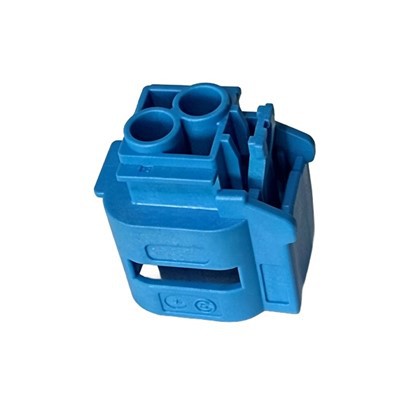
The Growing Need for High – Current in Automotive Applications
The modern automotive ecosystem is undergoing a radical transformation. With the advent of electric vehicles (EVs), hybrid electric vehicles (HEVs), and advanced driver – assistance systems (ADAS), the power requirements of cars are increasing exponentially. EVs, in particular, rely heavily on high – current systems to charge the battery, power the electric motor, and operate various on – board electronics.
In traditional internal combustion engine (ICE) vehicles, the electrical systems were relatively simple, with lower current demands. However, the shift towards electrification has changed the game. High – current applications are no longer limited to just starting the engine but are now integral to the vehicle’s core functionality. For instance, fast – charging stations for EVs require connectors that can handle currents of several hundred amps to recharge the battery in a reasonable time.
Technical Challenges in High – Current Handling
Handling high – current in automotive connectors is not without its challenges. One of the primary issues is heat generation. According to Joule’s first law, the power dissipated as heat (P) in a conductor is given by the formula (P = I^{2}R), where (I) is the current and (R) is the resistance. As the current increases, the heat generated also increases significantly. Excessive heat can lead to various problems, including melting of insulation materials, degradation of the connector’s mechanical properties, and even short – circuits.
Another challenge is voltage drop. A significant voltage drop across a connector can reduce the efficiency of the electrical system and affect the performance of the connected components. In high – current applications, minimizing the voltage drop is crucial to ensure that the electrical power is effectively transferred from the source to the load.
Mechanical stress is also a concern. High – current connectors often carry large cables, and the physical weight and movement of these cables can put stress on the connector. This stress, combined with the heat generated, can cause the connector to loosen over time, leading to poor electrical contact and potential safety hazards.
Design Features of Our High – Current Automotive Connectors
To address these challenges, our company has developed a range of high – current automotive connectors with several innovative design features.
Material Selection
We use high – conductivity materials for the contact elements of our connectors. Copper and its alloys are our materials of choice due to their excellent electrical conductivity and relatively low resistance. This helps to minimize the heat generated during high – current operation. Additionally, these materials have good mechanical properties, which can withstand the mechanical stress associated with high – current applications.
For the insulation materials, we select polymers that have high thermal resistance and good electrical insulation properties. These materials can prevent electrical leakage and protect the contact elements from environmental factors such as moisture and dust.
Contact Design
Our connectors feature a unique contact design that maximizes the contact area between the mating parts. A larger contact area reduces the contact resistance, which in turn reduces the heat generated and the voltage drop across the connector. We use a combination of spring – loaded contacts and precision – machined surfaces to ensure a reliable and stable electrical connection.
The contact design also includes features to prevent fretting corrosion. Fretting corrosion can occur due to small vibrations in the vehicle, which can cause the contact surfaces to rub against each other. This can lead to the formation of an oxide layer on the contact surfaces, increasing the resistance. Our connectors are designed to minimize the effects of fretting corrosion through the use of special coatings and surface treatments.
Cooling and Heat Dissipation
To manage the heat generated during high – current operation, our connectors incorporate cooling and heat dissipation features. Some of our connectors have built – in heat sinks, which are designed to transfer the heat away from the contact elements. These heat sinks are made of materials with high thermal conductivity, such as aluminum, and are strategically placed to maximize the heat transfer efficiency.
In addition to heat sinks, we also design our connectors with ventilation channels. These channels allow air to flow through the connector, carrying away the heat and preventing the build – up of hot spots.
Sealing and Environmental Protection
Automotive connectors are exposed to a wide range of environmental conditions, including moisture, dust, and chemicals. Our high – current connectors are designed with robust sealing mechanisms to prevent the ingress of these contaminants. This helps to maintain the electrical performance of the connector over its lifespan and reduces the risk of corrosion and electrical failures.
Quality Assurance and Testing
As a responsible automotive connector supplier, we understand the importance of quality assurance in high – current applications. Our connectors undergo a rigorous testing process to ensure that they meet the highest standards of performance and reliability.
We conduct electrical tests to measure the contact resistance, voltage drop, and insulation resistance of the connectors. These tests are performed under various current and temperature conditions to simulate real – world operating scenarios.
Mechanical tests are also carried out to evaluate the connector’s ability to withstand vibration, shock, and mechanical stress. We use specialized test equipment to subject the connectors to different levels of vibration and shock, and then measure the electrical performance before and after the tests.
Environmental tests are conducted to assess the connector’s resistance to moisture, dust, and temperature variations. Our connectors are placed in chambers with controlled humidity and temperature conditions, and their performance is monitored over an extended period.
Applications of Our High – Current Connectors
Our high – current automotive connectors have a wide range of applications in the automotive industry. They are used in EVs and HEVs for battery charging, power distribution, and motor control. In fast – charging stations, our connectors ensure a safe and efficient transfer of high – current power from the grid to the vehicle’s battery.
They are also used in commercial vehicles, such as trucks and buses, which are increasingly adopting electrification technologies. Our connectors provide a reliable solution for high – power electrical systems in these vehicles, ensuring smooth operation and reduced downtime.
The Significance of Our High – Current Connectors
The role of our high – current connectors in the automotive industry is of utmost importance. They are the key components that enable the efficient transfer of electrical power in high – current applications. Without reliable connectors, the performance and safety of modern automotive electrical systems would be severely compromised.
Our connectors contribute to the overall efficiency of the electrical system by minimizing the heat generation and voltage drop. This not only improves the performance of the connected components but also reduces energy consumption, which is crucial for the sustainability of the automotive industry.
In addition, our connectors enhance the safety of the vehicle. By preventing electrical failures and short – circuits, they help to reduce the risk of fire and other safety hazards in high – current applications.
Contact Us for Your High – Current Connector Needs
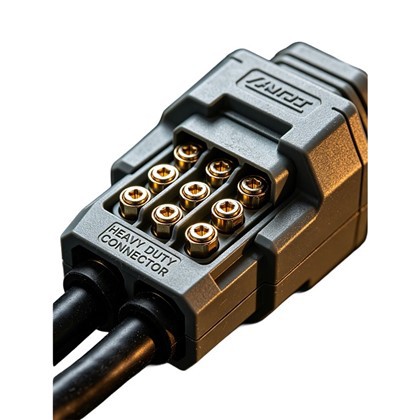
If you are in the market for high – current automotive connectors, we invite you to reach out to us. Our team of experts is ready to provide you with detailed information about our products, including specifications, performance data, and pricing. We can also work with you to develop customized connector solutions that meet your specific requirements.
Industrial Connectors Whether you are an automotive manufacturer, a supplier of automotive components, or a developer of charging infrastructure, our high – current connectors are designed to meet your needs. Contact us today to start a discussion about how our connectors can enhance the performance and reliability of your high – current automotive applications.
References
- Grover, F. W. (1946). Inductance Calculations: Working Formulas and Tables. Dover Publications.
- Southwell, D. (2001). Electrical Connectors Handbook. Newnes.
- Kutz, M. (2005). Mechanical Engineers’ Handbook: Materials and Mechanical Design. John Wiley & Sons.
Modelon Precision Industry (Suzhou) Co., Ltd.
With abundant experience, we are one of the most professional automotive connector manufacturers and suppliers in China. Welcome to buy customized automotive connector at competitive price from our factory. If you have any enquiry about pricelist, please feel free to email us.
Address: 1st Floor, Building 22, No. 2628 North Gate Road, Kunshan City, Jiangsu Province, P.R.China
E-mail: jessica_huang2025@163.com
WebSite: https://www.modeloncn.com/
