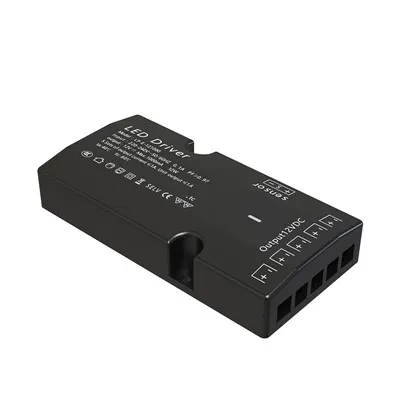
Hey there! I’m working for an LED driver supplier, and today I wanna chat about the different types of dimming methods for LED drivers. LEDs have taken over the lighting world thanks to their energy efficiency, long lifespan, and flexibility. But to make the most of these benefits, picking the right dimming method is super important. LED Driver
1. Triac Dimming
Let’s start with Triac dimming, which is one of the oldest and most common dimming methods out there. It’s the same dimming tech that’s been used for incandescent bulbs for a long time. The basic idea behind Triac dimming is to chop off part of the AC voltage waveform that’s sent to the LED driver. By doing this, we can control how much power reaches the LEDs, and therefore, how bright they shine.
One of the big advantages of Triac dimming is that it’s really easy to use. Most people already have Triac dimmers installed in their homes or offices, so it’s a simple swap to use them with LED lights. It’s also a cost – effective option, since you don’t have to buy new dimming equipment.
However, Triac dimming isn’t perfect. LEDs and Triac dimmers don’t always play well together. Sometimes, you might notice flickering or buzzing when you use a Triac dimmer with an LED driver. This is because the way Triac dimmers work is a bit different from what LEDs are used to. Also, Triac dimming usually has a limited dimming range. You might not be able to get the LEDs as dim as you’d like.
2. 0 – 10V Dimming
Next up is 0 – 10V dimming. This method uses a low – voltage control signal (between 0 and 10 volts) to adjust the brightness of the LEDs. When the voltage is at 10V, the LEDs are at their full brightness. As the voltage drops towards 0V, the LEDs get dimmer.
One great thing about 0 – 10V dimming is its smooth dimming performance. You can get a really wide dimming range, from full brightness all the way down to almost complete darkness. It’s also a pretty reliable method, and it doesn’t have the same compatibility issues as Triac dimming.
But there are some downsides too. First, you need to have a separate 0 – 10V control circuit. This means more wiring and installation work, which can be a pain, especially in existing buildings. Second, 0 – 10V dimming systems can be a bit more expensive than Triac dimming systems because of the extra components needed.
3. PWM (Pulse – Width Modulation) Dimming
PWM dimming is a bit different from the previous two methods. Instead of changing the voltage, PWM dimming works by rapidly turning the LEDs on and off. The ratio of the on – time to the total time (the duty cycle) determines the perceived brightness of the LEDs. For example, if the LEDs are on for half of the time and off for the other half, they’ll appear to be at 50% brightness.
The big advantage of PWM dimming is its high – quality dimming performance. It can achieve a very wide dimming range, often down to less than 1% brightness. And because it doesn’t change the voltage, it can be more efficient than other dimming methods.
However, PWM dimming also has its challenges. If the switching frequency is too low, you might be able to see the flickering, especially in some sensitive applications like photography or video production. And like 0 – 10V dimming, it usually requires a more complex control system.
4. DALI (Digital Addressable Lighting Interface) Dimming
DALI dimming is a digital dimming method that uses a two – wire communication protocol. Each LED driver in a DALI system has its own unique address, which allows for individual control of each light fixture.
One of the biggest advantages of DALI dimming is its flexibility. You can group and control different lights in different ways. For example, you can create scenes where different lights are set to different brightness levels, depending on the time of day or the activity in the room. It also provides detailed feedback about the status of each light fixture, like the current brightness level, the temperature, and any faults.
But DALI dimming systems are more complex and expensive to install compared to the other methods. You need to have a DALI controller and a DALI – compatible LED driver for each light fixture. And the installation process requires a bit more technical knowledge.
5. Wireless Dimming
Wireless dimming is becoming more and more popular these days. There are different wireless protocols available, such as ZigBee, Z – Wave, and Bluetooth. These protocols allow you to control the LED drivers using a smartphone app, a remote control, or a smart home hub.
The main advantage of wireless dimming is its convenience. You don’t have to run wires for the control signals, which makes installation much easier, especially in retrofit projects. You can also control the lights from anywhere in the house as long as you have a connection to the control device.
However, wireless dimming can be affected by interference. Walls, other electronic devices, and even the distance between the control device and the LED driver can cause problems with the signal. And like DALI dimming, the initial cost of a wireless dimming system can be higher because of the need for wireless – enabled devices.
So, which dimming method is the best? Well, it really depends on your specific needs. If you’re looking for a simple and cost – effective solution for a home or small office, Triac dimming might be a good choice. If you need smooth and wide – range dimming, 0 – 10V or PWM dimming could be better. For large commercial projects or applications that require advanced control features, DALI dimming or wireless dimming might be the way to go.
As an LED driver supplier, we’ve got experience working with all these different dimming methods. We can help you pick the right one for your project, based on your budget, the type of installation, and the performance you’re looking for. If you’re in the market for LED drivers and want to know more about dimming options, or if you have any questions about our products, don’t hesitate to reach out. We’re here to make sure you get the best lighting solution for your needs. Let’s start a conversation about your next project!
Cabinet LED Driver References
- "LED Lighting Technology and Applications" by some lighting experts.
- Industry whitepapers on LED dimming methods.
Dongguan Lanbaoli Intelligent Technology Co., Ltd.
As one of the most professional led driver manufacturers and suppliers in China, we’re featured by quality products and low price. Welcome to buy advanced led driver for sale here from our factory. If you have any enquiry about quotation, please feel free to email us.
Address: 10th Floor, Building 32, Golden Town, No. 7 Technology Avenue, Houjie Town, Dongguan City, Guangdong Province
E-mail: anna@lampow.cn
WebSite: https://www.lblsensor.com/
