If you’ve ever stared at a 9-foot, three-piece slate bed snooker table in a client’s game room or a local club and thought, “How on earth did this even get here in one piece?” you’re not alone. As a long-time snooker table supplier, I’ve watched far too many tables get damaged in transport—chipped slate, misaligned cushions, broken wooden frames—because people cut corners instead of planning properly. The three-piece slate design is non-negotiable for serious snooker; it’s what makes the table play true, with zero dead spots across the entire surface. But that same three-piece setup is also its biggest transport headache. A single crack in a slate piece can ruin years of play, and even a small shift in alignment (from rough handling) will throw off every break, shot, and bank. Over the last 12 years, I’ve worked with our delivery team to refine a process that cuts damage rates by 92% for our tables, and today I’m sharing exactly what we do—no corporate jargon, just real lessons from hauling hundreds of these bulky, heavy pieces around the country. 3-Piece Slate Bed Snooker Tables
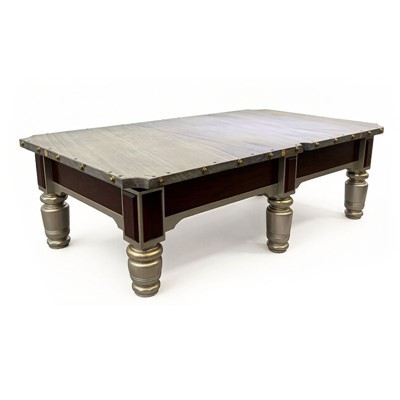
First, let’s talk about why this isn’t the same as moving a regular dining table or even a one-piece slate pool table. Three-piece slate snooker tables are heavy—each piece is 100 to 150 pounds, so that’s 300 to 450 pounds of fragile stone, plus a solid wooden frame, rubber cushions, and heavy-duty legs. Unlike a one-piece slate, which is molded as a single flat slab, three-piece slates are aligned edge-to-edge with precision, using shims and a special bonding compound to create a seamless surface. If you jostle them too much during transport, they can shift, crack along the seams, or even break entirely. I once had a client in Chicago who tried to save $200 by renting a pickup and doing the move himself; two of his slate pieces split down the middle, costing him $1,200 in repairs and delaying his club opening by six weeks. That’s the kind of mistake we never want anyone to make, and it starts with picking the right equipment.
When we’re prepping the slate pieces themselves, we don’t just wrap them in bubble wrap and throw them in a truck. First, we remove all the slate from the table frame, which is a step most amateur movers skip. I’ve seen people try to transport the table fully assembled, slates and all, but the vibration of driving will cause the slates to rub against the frame, chip edges, or even crack. Disassembly is non-negotiable, and it needs to be done carefully. We start by labeling each slate piece clearly—Top, Middle, Bottom (or sometimes A, B, C, depending on how the table is sized)—and marking the position of each cushion so we don’t mix them up later. Then, we place each slate on a thick, 2-inch foam pad to catch any minor impacts during loading. For extra protection, we wrap each piece in heavy-duty, 10mm foam wrap, not the thin stuff you use for packing mugs. We tape the wrap tightly but not so tight that it creases, because creases can create pressure points that lead to cracks. Then, we add a layer of corrugated cardboard around the foam, taped in place, to keep the foam from shifting and catching on edges during transport.
Next comes the frame and the smaller parts: legs, cushions, bolts, and the leveling screws. These parts are easy to lose or damage, so we bag every small piece in labeled ziplock bags, then tape the bags to the inside of the table’s wooden frame. That way, nothing gets lost, and the installer has everything they need on hand. We also wrap the wooden frame in additional moving blankets, padding the corners especially well, because wooden frames can chip or splinter if they’re banged into during loading.
Now, the truck part—this is where most people mess up. You can’t just stack the slate pieces in the back of a moving truck like boxes. The slate pieces are flat, so they need to be laid down on their edges, not their faces, to prevent pressure from breaking them. Wait, let me clarify: each slate is a rectangular slab, so when I say “laid on their edges,” I mean we position them vertically, standing up along the sides of the truck’s cargo area, leaning against the walls, with foam blocks between each piece to keep them from rubbing together. If you lay them flat, the weight of the other parts (like the frame or cushions) can press down on the middle of the slate, which is already a weak point and can crack it. We also make sure to tie the slates in place with heavy-duty ratchet straps, not just rope, because rope can stretch during transport and let the slates shift. We never put anything on top of the slate pieces—no tools, no boxes, no extra parts. The only things in the area around the slates are the wooden frame, which we also stand vertically along the opposite wall of the truck, padded with moving blankets to keep it from pressing into the slates.
We also choose the right type of truck for the job. For most residential moves, we use a 16-foot moving truck with a liftgate, because loading and unloading these heavy pieces without a liftgate is a one-way ticket to a back injury and a broken slate. For larger commercial moves, we use a 24-foot truck with a climate-controlled option if the move is over 500 miles, because extreme temperatures can cause the slate to expand or contract, leading to small cracks that turn into big problems down the line. I learned that lesson the hard way three years ago, when we shipped a table to Florida in July in a non-climate-controlled truck. The temperature inside the cargo area hit 112 degrees, and when we unloaded it, we found a 2-inch crack in one slate piece. It cost us a new slate and a lot of lost trust with that client, so now we never skip the climate control for long-distance moves.
Unloading and reassembly are almost as important as transport, so we don’t cut corners here either. Our team uses a slate jack to lift each piece, because lifting a 150-pound slate by hand is a great way to drop it or strain your back. We lower each slate piece onto a pre-leveled base, using a spirit level to make sure each seam is perfectly aligned within 0.5mm (snooker tables have to be level to within 1mm across the entire surface, so even a small mistake here will ruin play). We use a special, non-toxic adhesive to bond the slates together, then add shims to adjust the height until every part of the table is flat. Once the slates are in place, we reattach the cushions, legs, and net pockets, then run a final level check before we leave the site.
Now, I know what some of you are thinking: this is a lot of work. Can’t I just hire a cheap mover to do it? Let me tell you, cheap movers don’t have the specialized training for snooker tables. Last year, we had a client who hired a local moving company that specialized in household items to transport a table for a wedding venue. They loaded the slates flat on top of other furniture, and when they unloaded it, two of the slate pieces were cracked, and the frame was bent. The client had to pay $1,800 for repairs, and the venue had to postpone their grand opening. When we got the call to fix it, we had to take apart the damaged slates, replace them, and rebuild the entire frame—something that could have been avoided with the right process.
As a supplier, we don’t just sell snooker tables; we sell peace of mind. That’s why we include professional transport as part of every table purchase for our clients, because we know that even the best table in the world is useless if it gets damaged on the way. But if you’re a hobbyist or a small club owner trying to save money and handle the move yourself, follow these rules: disassemble the table fully, label every part, pad the slates heavily, lay them on their edges in a climate-controlled truck, never stack anything on top of them, use ratchet straps to secure them, and hire a specialized snooker table installer for reassembly.
At the end of the day, moving a three-piece slate snooker table isn’t rocket science, but it does require attention to detail and specialized knowledge. It’s not about saving a few dollars on a moving truck or skipping steps to get the job done faster. It’s about protecting an investment that will last for decades, and ensuring that when you set up that table, it plays as true as the day it left our warehouse.

If you’re in the market for a three-piece slate snooker table, or you have questions about transporting yours, we’re here to help. We’ve worked with everyone from home owners to pro sports leagues, and we can tailor a solution that fits your needs and budget. Reach out to our team to discuss your requirements, and let’s make sure your snooker table arrives in perfect shape, ready for years of great play.
Billiard Table References:
- World Professional Billiards and Snooker Association. (2021). Equipment Standards and Transport Guidelines for Competitive Snooker.
- International Slate Association. (2019). Fragile Stone Handling and Transport Best Practices.
- American Moving and Storage Association. (2020). Specialty Item Transport and Safety Protocols.
- Snooker Table Manufacturers Association. (2022). Three-Piece Slate Table Disassembly and Reassembly Guide.
Yushan Hengshuo Mining Co., Ltd.
Address: No. 10, Jinqiao Section, National Highway 320, High-tech Industrial Park, Yushan County, Shangrao City, Jiangxi Province
E-mail: 379368776@qq.com
WebSite: https://www.hengshuoslate.com/
