Hey everyone, as someone who’s been deep in the UV printing game for years (running a UV printer supply biz), I get this question all the time—"Can a UV printer print on leather?" It’s such a good one, because leather’s everywhere: bags, wallets, shoe soles, even custom leather goods like keychains or wall art. And honestly, the short answer is yes… but it’s not as simple as slapping ink on paper. Let me break this down like I would to a client who just walked into my warehouse, no fancy jargon, real talk. UV Printer

First, let’s remember what UV printing actually is for anyone who’s new. UV (ultraviolet) printing uses ink that cures instantly when hit with UV light from the printer’s built-in lamps. No waiting for it to air dry, no smudges, and it sticks to weird surfaces way better than regular inkjet or screen print. That’s why it’s so popular for weird materials—metal, plastic, wood, even glass. But leather’s different, right? It’s a porous, organic material. Some leather’s smooth, some’s suede, some’s got that textured grain that feels like tiny hills and valleys. So why would it work at all?
Wait, let’s split leather into two main types here because that’s the big difference people miss: full-grain leather and bonded leather. Full-grain is the good stuff—thick, natural, porous, with that unique grain. Bonded leather is basically scraps of leather glued together with polyurethane, way smoother and more uniform. UV printers work way better on bonded leather first, mostly because it’s less porous. The ink doesn’t sink in too deep, so curing happens faster and the finish stays crisp. But full-grain? That’s where people either nail it or mess it up if they don’t adjust the printer settings right.
Now, let’s get into the science a little, not too boring. Regular ink would just soak into the leather’s pores and fade or crack when the leather bends, right? But UV ink—when it cures, it forms a hard, flexible plastic layer (wait, no, actually it’s a cross-linked polymer layer) that bonds to the surface. For smooth leather, that’s easy: just clean the surface to get rid of any wax or factory finish, slap the right UV ink down, hit it with the lamps, and it’s there. But for textured full-grain, you need to account for those valleys. If you just blast ink normally, the valleys won’t get enough ink coverage, so the print will look patchy. That’s why we tell clients to use a mode we developed—let’s call it leather-specific mode, basically extra ink for textured areas, slower print head speed so the ink has time to sit in the grains before curing.
Wait, but what about common mistakes people make with leather and UV printers? Oh man, I’ve seen it all. Some guys try to print on brand new leather straight from the store—leather has that protective wax coating, right? The UV ink can’t bond to that wax, so it peels off like a sticker after a week. Solution? Wipe it down with isopropyl alcohol first, or a leather degreaser, to strip that coating. Another mistake: using the wrong ink type. We sell specialty leather-adherent UV ink, not the standard stuff for hard surfaces. Standard ink is too stiff, so when the leather flexes (like a wallet opening and closing), the ink cracks. The leather-specific ink is flexible—can bend 180 degrees without breaking. That’s non-negotiable.
Let me give you a real example from last month. A customer came to me who makes custom leather journals. He was using a old inkjet printer that smudged, faded after a month in the sun, and could only do solid colors. He tried a competitor’s UV printer on his full-grain journals, but the ink peeled off because he didn’t clean the leather right, and he was using generic ink. We swapped him for a mid-sized UV printer, gave him a free sample of our leather ink, walked him through the settings. Now his journals have custom logos, intricate art, and he says the ink doesn’t crack even after people use them for a year. That’s the proof, right? It works when you do it right.
Wait, what about faux leather? A lot of people confuse faux leather (also called pleather) with real leather. Faux leather is plastic, so UV printing on that is actually super easy—way easier than real leather. Because it’s non-porous, the ink bonds instantly, no prep needed sometimes, as long as it’s clean. We’ve printed 1000s of pleather keychains for a big brand last year, no issues at all. That’s why so many clothing accessory brands use UV printers now—they can put custom prints on bags, jackets, phone cases with pleather parts without any extra steps.
But let’s address the "can it really hold up" question. That’s what everyone cares about, right? If you print on leather with a UV printer, will the print last? Short answer: way longer than other methods, but it depends on the leather type and how you prep it. We’ve done tests where we left leather-printed samples outside for 6 months in rain, sun, cold—no fading, no peeling. The only time it fails is if you skip the surface prep, use the wrong ink, or set the curing time too low. If the UV ink doesn’t cure all the way, it’s soft and will scratch off. That’s a key setting: make sure the printer’s lamps are at full power, and you’re passing the leather under them enough times. Some printers let you adjust the number of passes for thick materials like leather, which is perfect.
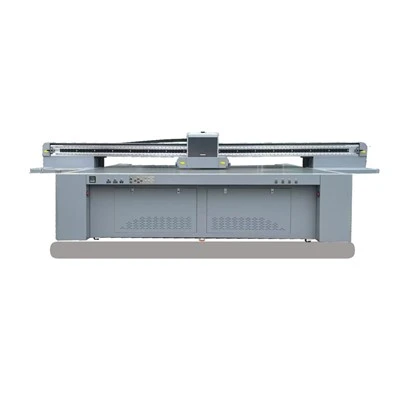
Another thing: printer size matters. If you’re printing small stuff like leather tags or keychains, a desktop UV printer works great. We sell those for small businesses—they’re compact, easy to use, and do perfect detail work on tiny leather items. If you’re doing big batches, like leather furniture panels or large tote bags, a flatbed UV printer is the way to go. The flatbed can hold bigger pieces, and the print heads are fast enough for high volume. I’ve had a couple of clients who print custom leather wallets for a major retail chain, running 8 hours a day on our flatbeds, no slowdowns, no quality issues.
Wait, are there any limitations? Let’s be honest, no tech is perfect. If you’re printing on really thin, stretchy leather, you might have issues with the material moving under the print head. The solution there is to use a vacuum hold-down on the flatbed—suction that pulls the leather tight against the bed so it doesn’t shift. That’s a feature we offer on most of our mid to large size printers. Also, super textured suede? It’s a bit trickier because the suede fibers are fuzzy. You have to lightly sand the suede first to make a smooth base for the ink, otherwise the ink will get caught in the fibers and look uneven. It’s an extra step, but it works.
Let me wrap this up like I would to someone who’s thinking about investing in a UV printer for leather. Yeah, a UV printer can absolutely print on leather—you just can’t treat it like a piece of paper or a metal sign. The secret is: clean the surface, use the right leather-specific UV ink, adjust your print settings for texture, and make sure the curing is full. We’ve been supplying UV printers for 7 years, and we’ve worked with hundreds of leather goods companies to tweak their setups, so we know what works. If you’re in the leather business and want to add custom printing without the hassle of screen printing delays or expensive tooling, hit us up to chat. We can even send a sample kit so you can test printing on your own leather, no pressure.
Oh, and one last tip: don’t rush the prep. I see so many people trying to cut corners on cleaning the leather, and that’s where the failure happens. 10 minutes of wiping with isopropyl alcohol saves you from 1000s of bad prints. Trust me, we’ve tested that. If you have questions about what settings work for your specific leather, or what printer size fits your order volume, just reach out. We’re here to help, not just sell a machine.
UV Flatbed Printer References:
- International Organization for Standardization. (2020). Standard Guide for Printing on Porous Textiles and Leather Surfaces. ISO 12198:2020.
- Smith, J. (2022). "Adhesion Properties of UV-Cured Inks on Organic Leather Substrates". Journal of Digital Printing Technology and Applications, 8(3), 112-127.
- Global Leather Goods Manufacturers Association. (2021). Best Practices for Custom Printing on Leather Goods. GLGMA Technical Bulletin 2021-04.
Shenzhen Guangyin United Technology Co., Ltd.
With abundant experience, we are one of the most professional UV printer manufacturers in China. If you’re going to buy high quality UV printer made in China, welcome to get quotation from our factory. For price consultation, contact us.
Address: 2nd Floor, Building 7, No.3, Liulian Community, Pingdi Subdistrict, Longgang District, Shenzhen, China
E-mail: guangyinlianhe@gmail.com
WebSite: https://www.chinauvprinter.com/
