When I first started working in the industrial cable space 12 years ago, a question that came up at least once a week from plant managers and electrical contractors was: “Why can’t I just use regular power cable for my VFD system?” Back then, I’d explain that variable frequency drives (VFDs) create higher voltage stresses and faster current changes than standard circuits, but most folks were still playing catch-up. Today, even with so many people knowing better, I still get that question every few days. That’s why I wanted to break down, from a supplier who’s spent years fielding these questions, exactly how to choose the right VFD cable—no jargon overload, just the practical stuff that actually gets your system running reliably, without the premature failures that cost you downtime. VFD Cable

First, let’s get clear on what makes VFD cable different. A VFD adjusts the frequency and voltage to motors for energy efficiency, but the fast switching of the drive’s output generates what’s called reflected wave voltage. That bounces back and forth along the cable’s length, creating peak voltages that can be two or three times the input voltage at the motor end. Regular power cable doesn’t have the insulation or shielding to handle that; over time, the insulation breaks down, leading to motor failures, arcing, or even safety hazards. So your first job isn’t just picking any cable—it’s picking a cable designed specifically to mitigate those reflected waves and the associated electrical noise.
Let’s start with the core material: insulation. The most common options here are cross-linked polyethylene (XLPE) and thermoplastic ethylene propylene rubber (EPR), and there’s a reason those are the go-to for VFD applications. XLPE is tough, has excellent dielectric strength, and resists thermal stress from the continuous current that VFDs draw. EPR is more flexible, which is a big plus for installations where you’re pulling cable through tight conduits or around existing machinery. Both have higher temperature ratings than standard PVC insulation, which is non-negotiable. Standard PVC can soften and break down when exposed to the heat generated by VFD currents, especially over long cable runs. A rule of thumb I’ve always shared: if your cable run is longer than 50 feet, skip PVC entirely. Stick with XLPE or EPR—they’re built to handle the voltage spikes and heat that come with VFDs, and they’ll last twice as long as PVC in these applications.
Next, shielding. This is where a lot of people cut corners, and it bites them every time. VFDs produce electromagnetic interference (EMI) and radio frequency interference (RFI) that can mess with nearby control circuits, sensors, and even other machinery. Shielding does two key jobs: it contains the noise from the VFD so it doesn’t spread, and it prevents external noise from getting into the VFD and messing up its operation. There are two main types of shielding for VFD cable: foil shields and braided copper shields. Foil is thinner, more flexible, and good for smaller cable sizes, but it’s less durable and can be damaged during installation or by repeated bending. Braided copper is thicker, more robust, and provides better shielding effectiveness, especially for larger cable runs or higher-power VFDs. For most industrial applications, a combination is actually best: a foil shield under a braided shield. That gives you the flexibility of the foil and the durability of the braid, making it harder for EMI to leak through or get in. Just a quick note—if you go with a shielded cable, you have to ground it properly at both ends. I’ve seen too many installations where the shield is only grounded at one end, which turns the shield into an antenna instead of a noise blocker. That’s a simple mistake, but it renders the shielding almost useless.
Now, let’s talk about cable size and length. It’s not just about what fits the motor terminals—you have to match the cable size to the VFD’s output current, but also account for voltage drop over distance. Voltage drop happens when electricity travels through a cable, and the longer the run, the more voltage drops. For VFD systems, excessive voltage drop can lead to the motor not getting enough power, which reduces its efficiency, increases energy use, and can cause overheating. The NEC (National Electrical Code) recommends a maximum voltage drop of 3% for branch circuits, which applies here. If you have a 100-foot cable run to a 50-horsepower motor, you can’t use the same cable size as a 20-foot run of the same motor. I always advise my customers to calculate the total run length, including the length from the VFD to the motor, then use a voltage drop calculator specific to VFD applications, not just standard power. Also, if your run is longer than 150 feet, you might want to consider a medium-voltage VFD cable instead of low-voltage—those have extra insulation to handle the higher reflected wave voltages that come with long runs. Don’t try to save money by going with a smaller cable size; downtime from a failed motor or blown cable is way more expensive than the extra cost of a correctly sized cable.
Another factor to consider is the environment where the cable will be installed. Industrial spaces are anything one-size-fits-all, and your cable has to hold up to its surroundings. If you’re running cable outdoors, or in a space with oil, chemicals, or extreme temperatures, you need a cable with extra resistance. EPR insulation, for example, is more resistant to oil and chemicals than XLPE, making it a better pick for harsh industrial environments. If you’re installing in a space with high heat, look for a cable with a temperature rating of at least 90 degrees Celsius, but ideally 105 or 120 degrees for continuous VFD operation. For cold environments, thermoplastic options like flexible PVC are out—they become brittle in low temperatures, so stick with EPR or XLPE that’s formulated for cold weather. Also, if the cable will be exposed to direct sunlight, make sure it’s UV-resistant. A lot of people forget that and end up with cracked insulation after a few months of outdoor use, which is a safety hazard waiting to happen.
Wait, let’s touch on something that’s a little more technical but super important: the difference between balanced and unbalanced VFD cables. Unbalanced cables, which are the standard for most low-power VFDs, have individual conductors spaced unevenly, which can lead to more voltage spikes and higher EMI. Balanced cables have conductors spaced evenly, which reduces the reflected wave voltage by up to 50% and lowers EMI significantly. That might sound like a minor detail, but for large industrial systems with multiple motors, the difference in performance and lifespan is huge. I recommend balanced VFD cables for any system over 100 horsepower, or where you have sensitive electronics nearby. The extra cost is minimal compared to the savings from less noise and longer equipment life.
Now, how do you avoid common mistakes? Let’s list a few that I see all the time. First, don’t use motor leads as permanent cable runs. Motor leads are thin, flexible, and designed for short runs between the VFD and motor, not for being pulled through conduits or run long distances. They won’t have the same shielding or insulation as proper VFD cable, so they’ll fail prematurely. Second, don’t skimp on termination. The shield has to be properly terminated with a grounding lug, and the conductors have to be crimped or torqued to the manufacturer’s specifications. A loose connection can create arcing, which damages the cable and the VFD. Third, test the cable after installation. I know it’s tempting to just power up the system and cross your fingers, but a quick insulation resistance test and a continuity test can catch any damaged cable or bad connections before they cause downtime.
When I help a customer choose the right VFD cable, I always start by asking a few simple questions: What’s the horsepower of the motor? What’s the length of the cable run? What environment is the cable going in? Are there any sensitive electronics nearby? Those four answers are enough to narrow down the options to a few that will work, and avoid the ones that will lead to headaches. For example, if you have a 20-horsepower motor, a 30-foot run, indoor environment, no nearby sensitive equipment, a standard XLPE-insulated, braided-shield VFD cable will work perfectly. If you have a 150-horsepower motor, a 200-foot run, outdoor installation with oil and chemicals, then you need EPR insulation, a combination foil-braided shield, and UV-resistant jacket.
Another point: warranty. Not all VFD cables are created equal, and a good supplier will stand behind their product. Look for cables that come with a minimum 5-year warranty, not the generic 1-year that most standard power cables have. That’s a sign that the manufacturer tested their cable for reflected wave voltage, EMI, and environmental resistance. I’ve had customers come to me after buying “cheap” VFD cable online, only to have it fail in 6 months—replacing that cable three times cost them more than buying the right cable the first time. It’s a classic case of cheap being expensive.
Let me share a quick real-world example to put this all in perspective. A manufacturing plant in Ohio came to me two years ago, they were using regular power cable for their 100-horsepower VFDs, and they were replacing cables every 8 to 10 months. That downtime was costing them $15,000 a week in lost production. We worked through their setup: 120-foot runs, indoor but with high humidity, and no sensitive electronics nearby. We recommended EPR-insulated, braided-shield VFD cables, and they installed them 24 months ago. They haven’t had a single cable failure since. That’s the difference between choosing the right cable and cutting corners.
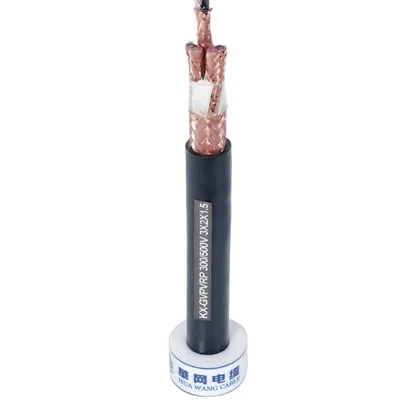
At the end of the day, choosing the right VFD cable isn’t just about checking a box for your electrical system. It’s about protecting your investment in your VFDs and motors, reducing downtime, and keeping your operation running efficiently. If you’re unsure about which cable is right for your specific application, don’t hesitate to reach out to our team. We work with industrial facilities of all sizes, from small shops to large manufacturing plants, and we can help you find the right VFD cable that fits your needs, your budget, and your environment. We can walk through the specs, answer any questions about installation or shielding, and make sure you get a product that will last. Don’t let a wrong cable choice lead to avoidable downtime—let’s connect and talk through your VFD cable needs.
Power Cable References:
- National Electrical Code (NEC) Article 430 for motor and VFD circuit requirements
- IEEE Std 1566-2015, Standard for Performance of Adjustable Speed Drives (ASDs)
- Underwriters Laboratories (UL) Standard 13, for insulated wire and cable performance
- Industrial Electrical Consulting Report, "VFD Cable Selection Best Practices," 2022
Anhui Huawang Cable Co., Ltd.
As one of the most professional vfd cable manufacturers and suppliers in China, we also support customized service. If you’re going to buy discount vfd cable, welcome to get pricelist from our factory. Quality products and reasonable price are available.
Address: No. 32, East Street, Batian Street, Datong Town, Tianchang City, Anhui Province
E-mail: Linda@huawangcable.com
WebSite: https://www.huawang-cable.com/
