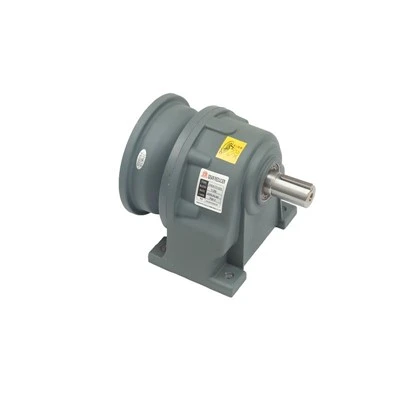
If you’ve ever stood next to a gear reduction motor whirring steadily, only to suddenly catch a faint acrid smell or notice its casing too hot to touch, you know how frustrating unexpected overheating can be. As a gear reduction motor supplier, I’ve seen this exact issue derail production lines, delay custom automation projects, and even shorten the lifespan of perfectly good motor systems long before their intended run time. Overheating isn’t just a minor nuisance—it’s a critical red flag that something’s out of alignment in how your motor is powered, mounted, maintained, or paired with the gearbox itself. Gear Reduction Motor

Let’s break down the most common causes, rooted in both the motor’s electrical design and the gear reduction system’s mechanical function, so you can spot issues before they lead to costly failures.
First, start with the electrical side of the equation. The motor’s copper windings are its beating heart, and they’re incredibly sensitive to current draw that’s too high. Most overheating starts right here, because excess current turns into heat—lots of it. What makes current draw too high? Two big culprits: overloading the motor and voltage mismatches. Overloading happens when your motor is asked to do more work than it’s rated for. For example, if you use a 1HP gear reduction motor for a conveyor belt that needs 1.5HP to move heavy loads, the motor will pull extra current to generate enough torque, and those copper windings will heat up fast. It doesn’t even have to be a permanent overload—intermittent spikes, like a conveyor jamming repeatedly, can also push current above the motor’s design limit, leading to gradual overheating over time.
Then there’s voltage mismatches. A lot of projects cut corners here: if you specify a 24V DC motor but wire it to a 36V supply, or a 120V AC motor to a 240V, the current draw jumps exponentially. That’s because a motor’s torque and current are inversely related to voltage—too high voltage means too much current, and that burns through the insulation on the windings, leading to overheating. Even low voltage can be a problem: if your supply is 10% below the motor’s rated voltage, the motor has to work harder to produce the same torque, drawing 10-15% more current to compensate, and again, excess heat builds up over time.
Next, look at the mechanical side, which is where the gear reduction system itself comes into play. This part is often overlooked because the gearbox is tucked between the motor and the load, so it’s easy to ignore until something goes wrong. The gear reduction system is designed to convert high-speed, low-torque output from the motor into low-speed, high-torque output for your application, but only if it’s properly matched and maintained.
One of the most common mechanical causes is improper gear mesh or misalignment. If the motor and gearbox aren’t coupled correctly—if the shafts are out of alignment by even a few degrees, or the coupling between them is worn or too loose—the gears grind against each other instead of rolling smoothly. That friction generates heat, and it’s not just a small amount: misaligned gears can raise operating temperatures by 20-30 degrees Celsius, enough to shorten the motor’s life by half or more. I’ve seen this happen on packaging lines, where regular vibration from moving boxes gradually shifts the motor mount, leading to misalignment and overheating over six months.
Another mechanical culprit is insufficient or degraded lubrication. Gears need specialized gear oil or grease to roll without friction, but many end users skip regular checks. Too little lubrication, or using the wrong type (like regular motor oil instead of gear-specific grease), causes metal-on-metal contact between gear teeth. That contact generates not just heat, but also metal shavings, which further damage the gears and create a vicious cycle of more friction, more heat, and more wear. Even if you use the right lubricant, if it’s old or contaminated with dust, debris, or moisture, it loses its viscosity and can’t protect the gears—again, leading to excess heat.
Heat also builds up because of poor ventilation. Wait, isn’t the motor supposed to be cooled? Most gear reduction motors have a fan attached to the motor shaft, or a housing designed to allow air flow over the windings and gearbox to dissipate heat. But if the motor is mounted in a tight, enclosed space with no air circulation—like inside a control cabinet with multiple other components—heat can’t escape. I once had a client who installed three gear reduction motors in a 12×12 inch control box, with no vents; within three weeks, all three had overheated so badly their winding insulation melted. Even dust buildup can block air flow: thick layers of dust on the motor housing or fan blades act as an insulator, trapping heat inside instead of letting it escape. If the fan itself is broken or clogged, that’s an immediate problem—without forced air cooling, the motor will run 50 degrees hotter than its normal operating temp in minutes.
Now, let’s talk about issues related to the load and application environment, because overheating often has less to do with the motor itself and more to do with how it’s being used. One example is frequent start-stop cycles. Some applications, like conveyor systems that stop and start multiple times an hour, or robotic arms that cycle through positions constantly, put extra stress on the motor during startup. When a motor starts, it draws 3-6 times its rated current (called inrush current) for a split second, and if that happens hundreds of times a day, the cumulative heat from each startup adds up. Over time, that repeated heat stress degrades the winding insulation, leading to gradual overheating even during steady state operation.
The operating environment itself is another factor. If you’re running a gear reduction motor in a high-temperature space—like a bakery, where ambient temperature is 90 degrees Fahrenheit or more, or an outdoor application in direct sunlight in the summer—the motor has to dissipate heat into a warmer surrounding, which is harder. Most standard gear reduction motors are rated for ambient temperatures up to 40 degrees; if you exceed that, the motor will run hotter than its rated limit, even with no other issues. I had a client in a metal stamping plant who initially used a standard motor outside the production bay, where ambient temp hit 100 degrees in the summer; within two months, the motor overheated constantly, until we supplied a high-temperature-rated model built to handle 60 degree ambient conditions.
Finally, there are hidden internal issues that develop over time, even with proper use. Winding damage from age or vibration is one—small cracks in the insulation on the copper windings cause internal short circuits, which lead to localized overheating spots. Another issue is bearing wear: the bearings that support the motor shaft and gear shafts reduce friction, but as they wear, they create friction and heat. A worn bearing will make a squealing or grinding noise, and if left unaddressed, it can seize up the shaft, leading to immediate overheating and motor failure.
Now, let’s put this all together to explain why it matters. Overheating doesn’t just shorten the motor’s lifespan—it leads to unplanned downtime, which is the biggest cost for any manufacturing or automation operation. A motor that fails unexpectedly can stop a production line for hours, costing thousands of dollars in lost output. At the same time, running a motor that’s overheating reduces its efficiency: excess heat means the motor is wasting energy, driving up electricity bills for no benefit.
As a gear reduction motor supplier, my team works with clients to avoid these issues from the start. We don’t just sell you a motor—we help you match the right motor to your load, account for ambient temperature, design proper mounting to avoid misalignment, and provide guidance on maintenance schedules to prevent lubrication and ventilation issues. For example, if you’re unsure whether your application needs a standard or high-temperature rated motor, or if you’re noticing unusual heat on your current system, our team can help diagnose the issue quickly, without wasting time or money on guesswork.
If you’re dealing with a gear reduction motor that’s overheating, or you want to avoid future issues with your next motor purchase, don’t wait for a breakdown. Reach out to our team to discuss your application, whether you need to troubleshoot an existing motor, source a custom gear reduction solution, or get guidance on proper maintenance. We’re here to help you keep your systems running smoothly, efficiently, and without unexpected overheating-related failures.
Explosion-proof Gear Motor References
- Electric Motor Overheating Causes and Prevention, National Electrical Manufacturers Association (NEMA), 2022.
- Gearbox and Motor Alignment Best Practices, American Gear Manufacturers Association (AGMA), 2021.
- Industrial Motor Maintenance Guidelines, Occupational Safety and Health Administration (OSHA), 2020.
- Effects of Ambient Temperature on Electric Motor Performance, IEEE Transactions on Industrial Applications, Vol. 57, No. 3, 2021.
- Lubrication Requirements for Gear Reduction Motors, Motion Industries Technical Bulletin, 2022.
GuangDong Ruisico Transmission Technology Co., Ltd.
Guangdong Ruisico Transmission Technology Co., Ltd. is one of the most reliable gear reduction motor manufacturers and suppliers in China, also supports customized service. Welcome to buy durable gear reduction motor made in China here and get quotation from our factory. For price consultation, contact us.
Address: No. 70, Anjing Road, Shengfeng Community, Xiaolan Town, Zhongshan City
E-mail: info@risc-drive.com
WebSite: https://www.risc-motor.com/
