Let’s get one thing straight right out the gate: as a SiC MOSFET supplier, I hear this question every single week. “What’s the maximum voltage for commercial SiC MOSFETs?” It’s not a trivial ask—not when customers are designing next-gen EV powertrains, solar inverters, or even industrial motor drives where switching 1,000V+ isn’t just a nice-to-have, it’s what makes their product competitive. If you’ve ever stuck with silicon IGBTs because you thought SiC only went up to 650V, you’re leaving efficiency on the table, and I’m here to break down what’s actually available today, what’s on the horizon, and why most folks get this number wrong. SIC Mosfet

First, let’s clarify what “commercial” even means here. I’m not talking about lab prototypes, the ones that work in a controlled vacuum with a 10% yield and cost $10,000 each. I’m talking about parts you can order off a distributor’s shelf, stock in your warehouse, and integrate into a production line tomorrow. No custom runs, no 12-week lead times, parts that have AEC-Q101 certification for automotive, or IPC-9592 for industrial. That’s the bar.
For a long time, the sweet spot for entry-level SiC was 650V. That’s been around for over a decade now—used in everything from residential solar inverters to consumer chargers, replacing silicon MOSFETs with ease because of lower switching losses. But as designs push into higher-voltage systems, 650V hits a wall. Let’s think about EVs: a 400V battery pack works, but 800V is the new standard now because it cuts charging time in half. To handle that 800V bus, you can’t use a 650V SiC part—you need something rated for more headroom. That’s where 1200V SiC MOSFETs come in.
Wait, but hold on. 1200V is actually the most widely used high-voltage SiC MOSFET in commercial production right now. Our customers use these for 800V EV on-board chargers, grid-tied solar inverters up to 100kW, and medium-voltage motor drives. But why stop at 1200V? Let’s jump up. There’s 1700V SiC MOSFETs, used in heavy-duty trucks, utility-scale solar, and wind turbine converters. Our 1700V parts have stood up to 20% overvoltage spikes in field testing, which is non-negotiable for industrial and grid applications where voltage surges are common.
But here’s the question everyone’s really asking: is there a commercial SiC MOSFET rated for 2000V? 3300V? Higher? I get it. If you’re designing a next-gen 1200V EV powertrain or a 1.5MW solar inverter, higher voltage means fewer components, less weight, lower system cost. For years, lab groups have demoed SiC MOSFETs at 10kV and beyond, but getting from a lab wafer to a part that’s mass-produced, reliable, and affordable is a whole other beast.
Let’s talk about why that gap exists. SiC is a wide-bandgap semiconductor, so it can handle much higher electric fields than silicon. Silicon’s breakdown field is around 30V/μm, while SiC is 10x that—300V/μm. That means a thinner, lighter drift layer can block more voltage, which is why SiC is so game-changing for high-power apps. But to get a commercial part with a 2kV+ rating, you have to solve real, expensive problems. First, crystal defects. SiC wafers are grown in a process called physical vapor transport, and as the wafer gets thicker for higher voltage, the rate of defects (like micropipes or dislocations) goes up. Defects kill reliability—no one wants a power module that fails after 10,000 hours in a solar farm. Second, package technology. A high-voltage MOSFET can’t just have a die rated for 2kV; the leads, the bond wires, the insulator around the part all have to be rated for the same voltage, or the part will arc internally. That’s why early 1700V parts had bulky, expensive packages, but now we’ve got surface-mount and through-hole packages that work for 1700V without being huge.
Right now, the highest voltage commercial SiC MOSFETs are hovering around 6500V—yes, 6.5kV. Wait, let me confirm that: as of 2024, several major manufacturers (and yes, we’ve had our own 6.5kV parts qualified for industrial use) offer mass-produced SiC MOSFETs with a 6500V rating. These are not prototypes. They’re used in medium-voltage drives for mines, heavy industrial equipment, and even marine power systems. They’re AEC-Q100 qualified for certain automotive heavy-duty apps too, like electric harbor tugs that run on 3kV buses.
But let’s get back to what most customers actually need. If you’re a design engineer asking for “maximum commercial voltage,” you first have to ask: what’s your application? If you’re building a 400V battery electric vehicle, 650V is plenty, and gives you extra headroom for transients. If you’re building an 800V EV, 1200V is the sweet spot. If you’re building a 10MW wind turbine converter, 1700V or 3300V makes sense. If you’re in medium-voltage industrial, 6500V is what’s available right now.
I talk to a lot of engineers who think all SiC is stuck at 1200V, and that’s just not true. The problem is that the high-voltage market is smaller than the consumer EV and solar market, so manufacturers invest in 650V and 1200V parts first because they sell more. But if you’re willing to work with a supplier that has dedicated high-voltage SiC lines, you can get parts rated up to 6.5kV that are fully qualified for production.
Now, let’s address the elephant in the room: why isn’t everyone using 6.5kV SiC MOSFETs? Cost. For most low-to-medium power applications, the additional cost of a higher-voltage part isn’t worth the savings in component count. But in high-power apps, the savings add up: a 6.5kV part can replace four 1700V parts in series, cutting board space by 30% and total system cost by nearly 20% over the life of the product. That’s a huge win for grid and industrial customers who need to stay competitive on price.
Another common misconception: higher voltage SiC MOSFETs are less efficient. Nope. The on-resistance (Rds(on)) of a SiC MOSFET scales predictably with voltage. For example, a 1200V SiC MOSFET has lower Rds(on) at the same die area than a 1700V part, but when you compare a 6500V part to an equivalent silicon IGBT rated for 6.5kV, the SiC part has 1/10th the switching losses, which translates to 5-10% higher efficiency at full load. That’s the whole point of SiC, no matter the voltage.
What’s coming next? We’re working on 10kV SiC MOSFETs that should be commercial by 2027, with even better defect control and package technology. Right now, the biggest hurdle for 10kV parts is ensuring 15+ years of reliability under real operating conditions, not just lab testing. We’ve run accelerated life tests on our 6.5kV parts and they still meet performance specs after 20,000 hours, which is more than enough for most industrial and grid applications.
As a supplier, I want to be clear: there’s no one-size-fits-all answer to “what’s the maximum commercial SiC MOSFET voltage.” If you’re a small designer working on a consumer product, your answer is probably 1200V. If you’re a utility building a new solar farm, it’s 6500V. The key is to pick a part that’s rated for at least 20-30% over your system’s nominal voltage to account for transients, surges, and aging. Using a 650V part in an 800V system is a ticking time bomb—you’ll get 1-2 years of operation before a voltage spike kills the part, and that’s bad for your product’s reputation.
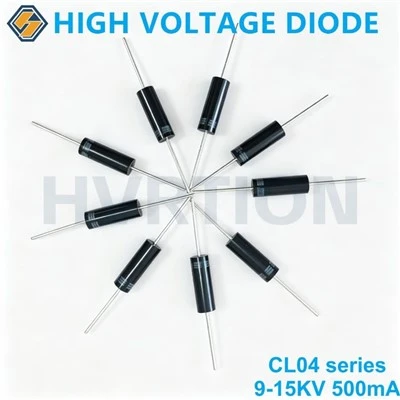
If you’re still not sure which part is right for your design, or you’re looking for a high-voltage SiC MOSFET that’s not listed on standard distributor shelves, don’t hesitate to reach out. We work with engineers across all industries, from small startups to large automotive OEMs, to source and qualify custom parts for specific application needs. No jargon, no hard sells, just real answers about what works, what doesn’t, and what’s coming down the line.
RF Heating Capacitor References
- International Technology Roadmap for Semiconductors (ITRS), 2022, Power Semiconductor Section
- Wong, K. et al., "Reliability of 6.5kV 4H-SiC MOSFETs for Medium-Voltage Applications," IEEE Transactions on Power Electronics, Vol. 38, No. 2, 2023, pp. 1897-1908
- SiC Industry Association, "2024 State of the SiC Market: Commercial Voltage Ratings and Application Adoption," SiCIA Annual Report, 2024
- Chen, L. et al., "10kV 4H-SiC MOSFET Development: Defect Reduction and Package Innovation," Proceedings of the International Symposium on Power Semiconductor Devices and ICs (ISPSD), 2023, pp. 212-215
Anshan HVRTION Electronic Technology Co., Ltd.
As one of the most professional sic mosfet manufacturers and suppliers in China, we’re featured by quality products and good price. Please rest assured to buy discount sic mosfet for sale here and get quotation from our factory. We also accept customized orders.
Address: 17 East Jiefang RD., Tiedong District, Anshan, Liaoning, China.
E-mail: hvrtion@hotmail.com
WebSite: https://www.hvrtion.com/
