If you’ve ever walked a patio, landscaped a backyard, or walked through a hotel lobby, chances are you’ve spotted both real rock and faux rock—and maybe even mixed them up. I’ve been supplying faux rock for years, and one question I get all the time is, “What’s the real difference between the two?” It’s not just about cost or looks; it’s about weight, durability, maintenance, and, let’s be real, how much of a hassle they actually are to work with. Let’s break this down like I would chat with a regular at a trade show—no jargon, just straight talk. Faux Rock
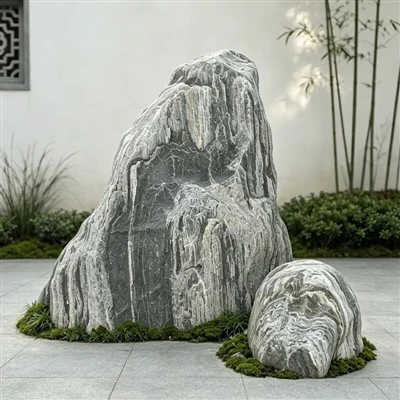
First, let’s get the basics out of the way. Real rock is exactly what it sounds like: natural stone that’s been quarried from the earth. You’ve got granite, limestone, sandstone, fieldstone—all that stuff that’s been sitting underground for millions of years. Faux rock? It’s man-made, usually from a lightweight concrete mix, fiberglass, or a polymer resin, molded to look just like the real deal. But the differences go way deeper than their origin story. Let’s start with the big one: weight.
Real rock is heavy—like, really heavy. A single cubic foot of granite weighs around 170 pounds, for reference. If you’re planning a backyard retaining wall, a small project might need hundreds of pounds of stone. That means you can’t just grab a couple pieces and haul them to the job site; you need heavy machinery, a team of strong workers, and often permits just to get it delivered. Last month, we had a customer who tried to source real rock for a small waterfall feature. They ended up having to rent a forklift just to move three boulders, and that added $800 to their budget. Faux rock? A cubic foot of our standard faux rock weighs about 20 to 25 pounds. That’s light enough for two people to carry, no forklift needed. Even a whole faux rock waterfall unit can be lifted by four people, which cuts labor time and costs a ton. It’s not just easier for homeowners, either—contractors love it because they don’t have to coordinate with heavy equipment rental.
Next up, durability. A lot of folks think real rock is indestructible, and to an extent, it is. But wait—real rock can crack when it’s hit with something heavy, or chip if it’s dropped from a height. It’s also porous, which means over time, water can seep into the cracks, freeze in cold weather, and expand. That causes it to split, which is a huge problem for things like outdoor retaining walls or landscaping. We had a customer in Minnesota last year whose real stone walkway cracked so bad after a winter freeze, they had to replace half of it. Faux rock? When it’s made right (like the stuff we supply), it’s UV-resistant, waterproof, and flexible. It won’t crack from freezing temps, and it doesn’t stain as easily as real rock—no more scrubbing moss or dirt out of tiny crevices. Sure, it’s not going to stand up to a sledgehammer, but for 99% of landscaping and decorative projects, it’s way more durable than people give it credit for. Plus, we stand by our faux rock’s durability—we’ve had installations that have been outside for 10+ years and look just like they did the day they went up.
Maintenance is another area where the two are night and day. Real rock, if you leave it, will accumulate moss, mildew, and dirt in all the little nooks and crannies. Depending on where you live, you might have to pressure wash it once a year, seal it every few years to keep water out, and watch for weeds growing in between the stones. For a big landscape, that’s hours and hours of work. Our faux rock? It has a smooth, non-porous surface (wait, no—wait, actually, it has a textured finish that looks like real rock, but the surface is sealed so dirt and moss can’t stick. You can just hose it off once a season, or even wipe it down with a wet cloth if it’s in a tight spot like a hotel lobby. Last summer, a restaurant client told us they used to spend $500 a year cleaning their real rock facade; with our faux rock, they’ve cut that down to $50 for a quick rinse. That’s a huge difference for small businesses trying to keep costs low.
Now, let’s talk about versatility. Real rock is limited by what’s available in the quarry near you. If you want a rare type of stone, it might be expensive, hard to find, and take weeks to ship. Faux rock? We can mold it to look like any stone—granite, limestone, even the weirdly shaped fieldstone that’s perfect for a rustic garden. We can also make it in custom sizes; if you need a big boulder for a waterfall, or a small rock for a planter, no problem. One of our most popular projects is faux rock coverings for utility boxes—you know, those ugly electrical boxes that stick out in people’s yards. You can’t exactly source a real rock that’s the right shape to fit over a box, but we make them all the time. Real rock can’t do that, because it’s rigid and can’t be shaped to fit uneven spaces. Faux rock is also easy to modify if you need to—you can cut it, drill holes in it for plants or lights, without worrying about it cracking. With real rock, drilling a hole usually means hiring a professional, which adds more cost.
Wait, but let’s not sleep on cost. A lot of people assume faux rock is cheaper, but it’s not always cut and dry. If you’re doing a small project—like a handful of rock garden pieces—real rock might be cheaper upfront. But when you add in delivery, labor, and maintenance over time, faux rock almost always ends up being a better deal. Let’s do a quick math check: a real rock boulder that’s 1 cubic foot might cost $50, but delivery is $300, and labor to move it is $200. That’s $550 for one boulder. A faux rock boulder the same size is $75, delivery is $50 (since it’s light), and labor is $50. That’s $175. Over time, if you have to replace real rock every 10 years, that adds up fast. Faux rock lasts longer, so you don’t have that replacement cost. Plus, some commercial spaces like hotels or malls have rules about not using real rock because of weight limits on floors—faux rock is the only way to go there.
Now, let’s clear up a common misconception: is faux rock “fake” in a bad way? No, not at all. The stuff we make is designed to look so much like real rock, most people can’t tell the difference unless they touch it. We get comments all the time from clients who say, “I had friends over, and they asked where I bought those real boulders!” It looks identical, but it’s way more practical. The only time you might notice a difference is if you’re really close—you can feel the smooth, molded surface instead of the rough, natural texture of real stone. But from a few feet away, it’s indistinguishable. That’s why so many people choose it for decorative projects where looks matter, but they don’t want the hassle of real rock.
I should also mention environmental impact, since that’s a big topic lately. Quarrying real rock can disrupt ecosystems, cause erosion, and use a lot of energy to extract and transport it long distances. Faux rock, on the other hand, is made in controlled facilities, and we use recycled materials in our mix whenever we can. It also takes way less energy to ship, because it’s lightweight. Last year, we switched to a recycled polymer for some of our faux rock pieces, which cut our carbon footprint by 30%—that’s a win for both clients and the planet.
So, who should choose which? If you’re doing a small, low-stakes project in a rural area where heavy equipment is easy to get, real rock might work. But if you’re doing a commercial project, a backyard with limited access, or you want something that’s easy to maintain, faux rock is the way to go. Even for homeowners—if you’ve ever tried to move a 100-pound rock, you know it’s not fun. I’ve seen so many clients come to us after struggling with real rock, saying they wish they’d gone with faux rock first.
At the end of the day, the difference isn’t just about what’s “real” or “fake”—it’s about what works for your project. Faux rock isn’t a second-best option; it’s a smart choice for most people. It looks great, it’s easier to work with, it saves money in the long run, and it’s more durable. If you’re not sure which one is right for you, just reach out. We work with homeowners, contractors, and commercial clients to figure out the best solution for their space. Whether you need a few rock planters, a retaining wall, or a utility box cover, we can make faux rock that fits your needs.
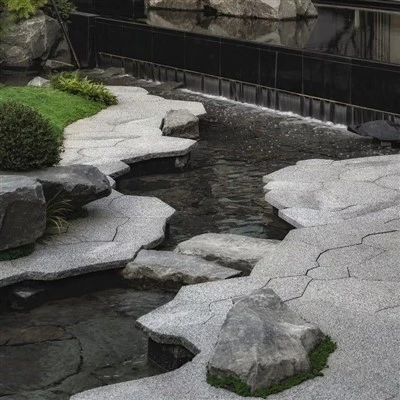
Don’t get stuck with the hassle of real rock. For projects where practicality meets style, faux rock is the way to go. Let’s chat about your next project, and I’ll help you figure out the best fit for your budget and space.
Landscape Boulders References
- American Society of Landscape Architects. (2022). “Material Selection for Outdoor Landscape Features.” Landscape Architecture Magazine.
- National Stone, Sand & Gravel Association. (2021). “Environmental Impacts of Quarried Natural Stone.” Industry Report.
- Construction Industry Institute. (2023). “Lightweight Materials for Commercial Construction.” Construction Technology Update.
Xinglong Landscape Greening Co., Ltd.
We are one of the most professional faux rock manufacturers and suppliers in China, also support customized service. We warmly welcome you to wholesale bulk high quality faux rock in stock here from our factory. If you have any enquiry about pricelist, please feel free to email us.
Address: Xiaoluli Natural Village, Wutongshan Village, Meishan Town, Changxing County, Huzhou City, Zhejiang Province
E-mail: 18667092034@163.com
WebSite: https://www.xinglonggreen.com/
