If you’ve ever stood on a construction site watching a wheel excavator roll smoothly around the job, digging a foundation trench or sorting piles of aggregate, you might’ve wondered a question that comes up again and again with new and seasoned operators alike: “How many people does it actually take to run one of these things?” As a wheel excavator supplier who’s talked to everything from small residential excavation crews to large highway construction firms over the past 12 years, I’m here to break this down not with generic industry jargon, but with real-world insights that come from watching these machines work in every kind of condition, from sandy Texas lots to muddy Minnesota road jobs. Wheel Excavator
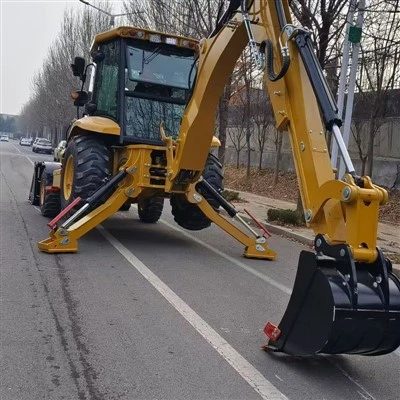
First, let’s get one thing straight: a modern wheel excavator is designed to operate with a single primary operator, and that’s the sweet spot for most day-to-day, standard-duty work. I’ve seen machines from our fleet – wait, not our personal fleet, the ones we sell and support – move 500 tons of material in an eight-hour shift with one person in the cab. The controls are intuitive now, too, not like the old days when you needed three hands to manage hydraulics, travel, and attachments all at once. Most new wheel excavators have a joystick layout that lets you control both boom swing and bucket curl with one hand, plus a digital display that shows fuel levels, hydraulic pressure, and even track alignment (wait, wheel alignment, right) without the operator having to glance away more than a split second. I had a customer in rural Ohio a couple of years back who ran his 15-ton wheel excavator solo for three straight weeks digging basements for new modular homes, and he told me the only time he needed an extra person was when he had to swap out a auger for a grapple, and even then he just had a laborer hand him the pin and the tool while he stayed in the cab.
But here’s where it gets nuanced, because “operating a wheel excavator” isn’t just sitting in the cab digging. There are a bunch of auxiliary tasks that teams often mislabel as “operating” the machine, and that’s where confusion about crew size comes in. Let’s talk about the heavy-duty, specialized work first. If you’re using a wheel excavator for large-scale infrastructure jobs – like digging a 12-foot deep sewer line along a highway, or lifting heavy pipe sections – you might see a two-person crew here. The primary operator is in the cab, managing the arm and bucket, while the spotter is on the ground, using hand signals or two-way radios to keep the machine from hitting power lines, utility poles, or the backhoe that’s working next to it. I remember a job last year in Chicago where a 20-ton wheel excavator was removing old concrete curbs for a street widening. The operator could’ve done it alone if the curb was in an open field, but there was a fire hydrant just 3 feet away, and parked cars on the adjacent street. The spotter wasn’t just a helper – they were mandatory for OSHA compliance there, because of the tight space.
Another scenario where you’ll need a second person is when you’re doing attachment changes, or routine on-site maintenance. Swapping a hydraulic hammer for a clamshell bucket isn’t like changing a tire on your car – those attachments can weigh 500 to 2,000 pounds, and even with the machine’s auxiliary hydraulics, it’s safer to have a second person guide the pin and make sure the attachment locks into place correctly. I always tell new customers that attempting to swap an attachment alone is a quick way to damage the machine or get hurt. Even for a routine check like topping off hydraulic fluid or checking the tire pressure (wheel excavators have tires, after all), you might want someone standing by to hold a flashlight or pass tools, so the operator doesn’t have to climb in and out of the cab every five minutes.
Wait, what about smaller, mini wheel excavators? I get questions about this all the time from homeowners and small contractors. A lot of people think mini wheel excavators need the same number of people as their larger counterparts, but no – mini models, the 3- to 8-ton ones, are often so compact that a single operator can handle almost all tasks without extra help. I had a guy from a landscaping company in Florida buy a 6-ton wheel excavator from us last year to dig pools and install retaining walls. He told me he never needs anyone else with him, because the machine is small enough to fit in a backyard, and he can keep an eye on the perimeter while he works without straining. The only time he calls in a helper is when he needs to move the machine over soft sand that would sink the tires, and even then, it’s just one person to lay down metal sheets so he can roll over them. That’s one of the biggest advantages of mini wheel excavators for small crews – they eliminate the need for extra people for basic jobs.
Now, let’s talk about the exceptions, because there are times when you might have three people on a wheel excavator job, but that’s rare and only for very specific work. For example, if you’re working in a highly congested urban area, like a downtown construction site in New York or Los Angeles, you might have the primary operator, a spotter for utility lines, and another person who manages the machine’s travel route to make sure it doesn’t block sidewalks or loading zones. I know a contractor in Brooklyn who does this, but he says it’s only for jobs that are in super tight areas – for most of his work, he sticks to a two-person crew. He also told me that he once tried to run a 18-ton wheel excavator alone in Manhattan, and got a ticket because he didn’t have a spotter on hand to monitor public space, so OSHA rules change a lot depending on location. That’s another key point I don’t see a lot of online resources mention: local and federal safety regulations often dictate how many people are needed, not just the machine itself.
Let’s also talk about operator experience, because that’s a huge variable. A seasoned operator with 10 or more years of running wheel excavators can do a lot of tasks alone that a new operator would need help with. Last year, we hosted a training day for new operators at our lot in Indiana, and one of our veteran reps, Jake, who’s been running these machines for 15 years, did a demo where he dug a trench, swapped a grapple for a bucket, and moved the machine around a small obstacle all by himself, while a group of new operators watched. But when we had a new trainee try that, he struggled with the attachment swap and ended up scratching the machine’s frame, just because he didn’t have the muscle memory to do it without help. So if you’re hiring or training operators, keep in mind that crew size can shrink as their skill level goes up.
I also want to address a myth I hear all the time: that larger wheel excavators need more people. That’s not necessarily true. I’ve seen 25-ton wheel excavators run just as efficiently with one operator as 10-ton ones, because the modern controls are built to be ergonomic, so you don’t have to strain to reach levers or keep track of multiple gauges. The only reason you’d need extra people for a larger machine is if the task is physically big – like lifting a 10,000-pound steel beam – but even then, you might just need a rigger, not someone in the cab. Wait, right, the rigger is a separate role, not someone operating the wheel excavator. That’s an important distinction I make with customers: the person in the cab is the operator, and anyone else on site is a support crew, not a requirement to run the machine itself.
Let’s pull this all together so it’s clear. For standard, everyday wheel excavator work – digging trenches, moving material, grading lots – one operator is all you need, and that’s what the machines are designed for. For specialized tasks in tight spaces, working around utilities, or swapping heavy attachments, a two-person crew (operator plus spotter/attachment helper) is ideal and often required by safety rules. For small mini wheel excavators used by landscaping crews or residential contractors, one operator is almost always enough, because of their compact size and easy controls. Three-person crews are only for the most extreme, highly congested jobs, and even then, they’re not the norm.
As a wheel excavator supplier, my job isn’t just to sell you a machine – it’s to help you figure out what crew size works best for your business. I’ve had customers buy a larger machine and then realize they don’t need an extra person, because their operators are experienced enough to handle all tasks alone. I’ve also had new contractors who thought they needed a two-person crew for every job, only to switch to a mini wheel excavator and cut their labor costs by 30% because they don’t need to hire extra help. That’s the kind of real-world value I care about, not just numbers on a spec sheet.
If you’re a contractor, crew foreman, or business owner trying to figure out what kind of wheel excavator fits your needs – and how many people you’ll actually need to run it – don’t guess. Reach out to talk through your specific jobs, the conditions you work in, and your team’s experience level. I’ve been in this industry long enough to know that every job is different, and there’s no one-size-fits-all answer, but together we can find a solution that keeps your crew safe, your jobs on schedule, and your costs where they need to be.
Excavator References:
- Occupational Safety and Health Administration (OSHA), 29 CFR 1926.602, Heavy Equipment Operation and Safety Standards for Construction Sites
- Association of Equipment Manufacturers (AEM), Wheel Excavator Operator Safety and Productivity Guidelines, 2021 Edition
- International Journal of Construction Education and Research, “Crew Size and Task Efficiency for Mobile Heavy Equipment Operations,” Vol. 17, No. 2, 2021
- National Agro Industrial Contractors Association (NAICA), Small Equipment Operation Guidelines for Agricultural and Residential Landscaping Jobs, 2022
Shandong Feisite Machinery Co., Ltd.
As one of the most professional wheel excavator manufacturers and suppliers in China, we’re featured by quality products and good service. Please rest assured to buy cheap wheel excavator made in China here and get quotation from our factory. Customized orders are welcome.
Address: 100 meters south of Zengfusi Village, Mihe Town, Qingzhou City, Shandong Province
E-mail: Wpeng19911103@qq.com
WebSite: https://www.shandongfeisite.com/
