As someone who’s spent the last 12 years sourcing, modifying, and supplying custom hydraulic jacks for industrial, automotive, and marine applications, I get a lot of questions from buyers early in their procurement process—most of them boil down to: “Is this jack safe? Will it hold up long enough for my job? Do I have any way to verify that the parts I’m buying aren’t cutting corners?” Other Hydraulic Jack
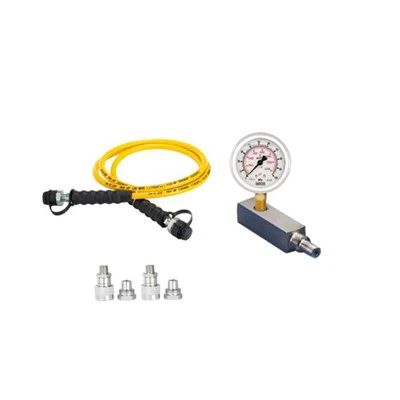
If you’re here because you’re looking for “other hydraulic jacks”—meaning jacks that aren’t the standard scissor jacks for passenger cars, the big bottle jacks you see at auto shops, or the heavy-duty lifting jacks used for bridge construction—you’re not alone. A lot of our clients come to us needing specialized jacks: low-profile models to slide under equipment in cramped factory basements, portable hydraulic jacks for field work in remote mining sites, or even custom jacks for lifting specialized marine vessels that need to sit level on uneven hulls. But no matter what your specific use case is, the most common pain point I see across small business owners, maintenance managers, and even independent repair technicians is confusion about certifications. People often ask, “Since this isn’t a standard jack, what certifications do I even need to ask for?” That’s the question I want to break down today, not just as a supplier, but as someone who’s sat across the table from procurement teams who’ve had to justify a jack failure that could’ve been prevented with proper testing, or smaller teams who just want to make sure the equipment they’re buying won’t let them down mid-job.
First, let’s clarify what we mean by “other hydraulic jacks” because that term covers a lot of ground, and certifications depend on both the design and the end use. For the sake of this conversation, these are hydraulic jacks that fall outside the most widely regulated categories: consumer scissor jacks (governed mostly by automotive safety standards) and the large, heavy-lifting jacks used for civil construction (regulated by OSHA and ASTM for overhead work). Our clients’ “other” jacks run the gamut: low-profile hydraulic jacks for lifting manufacturing machinery that sits just 12 inches off the factory floor, portable hydraulic toe jacks for moving heavy pallets in warehouses where overhead cranes aren’t an option, custom hydraulically actuated jacks for adjusting the height of stage sets or museum exhibits, and even specialized jacks for agricultural equipment that need to withstand mud, vibration, and extreme temperatures in field conditions. None of these fit neatly into the standard jack certification boxes, which is why so many people struggle to find clear answers.
Now, the good news: there are certifications for these non-standard jacks, but they’re not one-size-fits-all. The right certification depends entirely on how you’re going to use the jack. Let’s start with the most universal certifications that apply to nearly all hydraulic jacks, regardless of their specific use, then move to use-case-specific ones that our clients ask about most often.
First, ISO 9001. I know that sounds like a generic quality management certification, but it’s one of the most important for anyone buying or supplying other hydraulic jacks. ISO 9001 isn’t a safety testing standard—it’s a standard that governs how a manufacturer runs their entire production process: how they source raw materials, how they test each part of the jack, how they track quality issues, and how they train their teams. When we earned our ISO 9001 certification in 2015, it wasn’t just a box we checked for marketing; it forced us to revise our entire testing process for every custom jack we make. Before that, we did spot checks on batches of jacks, but ISO 9001 required us to test every single jack to its rated load capacity before it leaves our facility. That means if you buy a 20-ton low-profile jack from us, you can be confident it held 20 tons for the full 10-minute hold time we specify during testing, not just a sample. For a lot of our clients, especially those using jacks for repetitive daily lifting, ISO 9001 is the baseline to know that a supplier isn’t cutting corners on manufacturing.
Next, if your jack will be used in workplaces regulated by occupational safety agencies, OSHA (for the U.S.) or HSE (for the U.K.) compliance is non-negotiable for most industrial and commercial use. OSHA doesn’t have a standalone certification for hydraulic jacks, but it does require that all lifting equipment meets specific performance standards. For other hydraulic jacks, the most common reference standard OSHA uses is ASTM E1309, which is the Standard Specification for Hydraulic Jacks and Lifting Rams. ASTM E1309 lays out requirements for things like load capacity, leakage rates, structural integrity, and markering (including clear rated load labels that are visible and won’t rub off after use). For example, our low-profile toe jacks all have ASTM E1309 testing because most of our clients use them in warehouses that are subject to OSHA inspections. When an inspector shows up, they don’t ask for a special “other hydraulic jack” certification—they ask if the equipment meets ASTM E1309, which we can provide full test reports for.
If your work is in the marine industry, that’s a whole separate set of standards. We supply a lot of custom jacks for small shipyards and marine maintenance teams, and for those, the key certification is from the American Bureau of Shipping (ABS) or the International Organization for Marine Affairs (IOMA). ABS certification is required for any equipment that comes into contact with hulls or is used in saltwater environments because saltwater corrodes metal, which can weaken jack components over time. Our marine-grade hydraulic jacks go through extra testing: they’re treated with a rust-inhibitive coating that’s tested to withstand 500 hours of salt spray, and they’re pressure-tested to 150% of their rated load capacity to account for the uneven loads common when lifting a boat’s hull. A lot of first-time marine procurement specialists don’t know that standard hydraulic jacks (even ASTM-certified ones) aren’t built to handle saltwater corrosion, so an ABS certification here is non-negotiable to avoid jack failure mid-lift.
For agricultural use, that’s another niche with its own set of considerations. Farmers and agricultural maintenance teams use hydraulic jacks for lifting tractors, harvesters, and irrigation systems, often in muddy, dusty, and temperature extremes that standard jacks can’t handle. The certification most relevant here is NFPA T3.7, which is the National Fluid Power Association’s standard for hydraulic equipment used in agricultural applications. NFPA T3.7 requires that jacks have sealed hydraulic systems to keep out dirt and debris, as well as load ratings that are tested to withstand extreme temperatures (from -20°F to 120°F, depending on the model). We recently developed a line of agricultural hydraulic jacks for a client in Iowa that had been going through a new jack every 6 months because standard models seized up after a season of work in dusty fields; our NFPA-certified models have a sealed piston design that eliminated that issue, and they’ve lasted over 18 months without failure.
Now, I know what you’re thinking: what if my jack is custom, for a one-off project that doesn’t fit any of these categories? A lot of our clients come to us with a specific use case: lifting a historic bridge’s metal beams for restoration, lifting a custom-built RV’s chassis for maintenance, or even lifting a vintage steam engine for a museum. For these one-off custom jacks, formal third-party certifications might not be required, but that doesn’t mean you skip testing. For these, we work with independent engineering firms to do custom load testing: we attach the jack to a calibrated load cell, apply 125% of the rated load, hold it for 24 hours, and check for any structural deformation, leakage, or pressure drop. We provide a full engineering test report for every custom jack, which is essentially a certification tailored to your specific project. I always tell clients that even if you don’t need a formal third-party certification for a custom project, having that independent test report is just as good—if not better—than a generic ASTM certification, because it’s built specifically for your use case.
A common mistake I see buyers make is assuming that “more certification” is always better, or that a jack without a certification is automatically unsafe. That’s not true. For example, a small shop owner who needs a low-capacity jack to lift a personal woodworking machine in their garage might not need ISO 9001 or ASTM E1309 certification; a properly designed jack from a reputable supplier with a clear load rating and a 1-year warranty is perfectly safe for that use. On the flip side, if you’re using a jack to lift a 50,000-pound pallet in a warehouse, a generic jack without any third-party testing is a huge risk. I’ve seen one client lose an entire batch of high-end industrial parts when a non-certified jack failed mid-lift; that could’ve been avoided if they’d asked for a test report or a standard certification.
Another point to clarify: the certification applies to the jack’s design and manufacturing, not just the individual unit. A lot of unethical suppliers will take a standard, non-certified bottle jack, repaint it, and try to sell it as a “custom other hydraulic jack” for specialized use. That’s why it’s important to ask for specific documentation, not just a sales pitch. When a client asks us for certifications, we don’t just send a PDF of a generic ISO 9001 certificate—we send a specific test report for their exact model, including the load test data, material specifications, and any relevant compliance docs.
If you’re in the market for other hydraulic jacks, here’s a quick checklist to make sure you’re asking for the right certifications based on your use case:
- If you’re buying from a supplier, ask for proof of their quality management certification (ISO 9001 is the most common and reliable). This tells you they have consistent manufacturing processes, not just a one-time quality check.
- For industrial or commercial use subject to OSHA or HSE rules, ask for ASTM E1309 test reports for your specific jack model.
- For marine or saltwater applications, ask for ABS or equivalent marine equipment certification.
- For agricultural use, look for NFPA T3.7 certification to ensure the jack can handle dust, mud, and temperature extremes.
- For custom one-off projects, request independent engineering load test reports tailored to your jack’s specifications.
At the end of the day, the reason I’ve built my business around supplying other hydraulic jacks is because I know how specific those needs are. I don’t sell one-size-fits-all jacks; I work with each client to figure out exactly what they need, then provide the certifications and testing that align with their use case. I’ve seen too many projects delayed, damaged, or even become safety hazards because someone skipped asking for proper certifications to save a few dollars. A good jack isn’t just a piece of equipment—it’s a tool that lets you get your job done safely, on time, and without unexpected costs.

If you’re ready to talk through your specific hydraulic jack needs, whether it’s a low-profile model for a factory, a custom jack for a project, or something in between, don’t hesitate to reach out for a consultation. We can walk through your requirements, share relevant certifications and test reports, and help you pick the right jack for your needs.
Hydraulic Equipments References
ASTM E1309-19, Standard Specification for Hydraulic Jacks and Lifting Rams.
OSHA 29 CFR 1910.178, Powered Industrial Trucks.
National Fluid Power Association (NFPA) T3.7-2020, Agricultural Hydraulic Equipment.
American Bureau of Shipping (ABS) Rules for Building and Classing Marine Equipment.
Taizhou Galaxy Machinery Co., Ltd.
Taizhou Galaxy Machinery Co., Ltd. is one of the leading other hydraulic jack manufacturers and suppliers in China. We warmly welcome you to wholesale cheap other hydraulic jack for sale here from our factory. Good service and reasonable price are available.
Address: 18 Jiulong Road, Jiulong Town, Hailing District, Taizhou City, Jiangsu Province,China
E-mail: sales03@galaxy-machinery.com
WebSite: https://www.galaxy-machinery.com/
