Hey guys, let’s cut to the chase – if you’re someone who works in a warehouse, distribution center, or even a manufacturing plant, you’ve definitely noticed those annoying black skid marks forklifts leave on concrete floors. You know, the ones that take forever to scrub off, make the whole space look messy, and even pose a tiny slip hazard for your team. That’s why non-marking forklift tires are such a big deal, right? As a supplier who’s been knee-deep in these tires for years, I get tons of questions from fleet managers, maintenance heads, and even small business owners: “Are non-marking forklift tires actually environmentally friendly?” Let’s break this down like we’re chatting over a coffee (no stuffy jargon, promise). Non Marking Forklift Tire
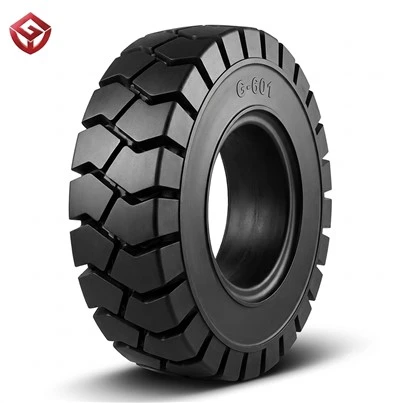
First, let’s get one thing straight – what makes a tire “non-marking” in the first place? Regular forklift tires are usually made with natural rubber plus a bunch of carbon black. Carbon black is cheap, super durable, and gives tires that classic deep black color. But here’s the catch: it’s also messy. As your forklift rolls around, tiny bits of carbon black wear off, stick to the floor, and those ugly skid marks show up. Non-marking tires skip most of the carbon black and replace it with other compounds – things like silica, synthetic rubber blends, and sometimes even a little bit of colored pigment (white, gray, or light blue, usually) instead of black. So that’s the basic difference in materials, but how does that tie to being eco-friendly?
Let’s start with the most obvious environmental win: less floor contamination, which means less cleaning. Think about it – how many times a day does your janitorial crew grab those pressure washers, floor scrubbers, and harsh chemicals to get rid of tire marks? I’ve been to warehouses where the entire cleaning budget is eaten up by tire mark removal. Those chemicals? A lot of them are harsh – things with phosphates, strong acids, or volatile organic compounds (VOCs) that don’t belong in the environment. When you wash those marks down the drain, they go straight to your local sewage system, and if your warehouse is connected to a storm drain? Even worse – they end up in rivers, lakes, or soil, messing with aquatic life and plant health. Non-marking tires cut that need for heavy cleaning by like 70-80% in most cases, from what our customers tell us. That’s less chemical runoff, less water waste from constant scrubbing, and a smaller carbon footprint from running all those cleaning machines (they use electricity, after all). It’s not a huge, flashy eco win, but it adds up fast for big operations with 10+ forklifts running 12 hours a day.
Wait, but let’s not get ahead of ourselves – what about the tire’s lifecycle, from raw material extraction to disposal? That’s the big picture of being environmentally friendly, right? Non-marking tires do have some pros here, but also a couple of myths I need to bust. First, the replacement part: regular forklift tires last a pretty long time, right? Well, non-marking tires used to have a reputation for wearing out faster. That was true back in the day – the old silica blends were softer, so they’d lose tread quicker. But these days, manufacturers (including us, obviously) have refined the compounds. Modern non-marking tires are almost as durable as regular ones, sometimes even more so if you’re running them on smooth concrete. So if they last longer, you’re not going through tires as often – that means less waste going to landfills, less energy used to make new tires, and less transport emissions from shipping extra tires around. That’s a solid eco win.
But here’s the thing I always have to explain to new customers: non-marking tires aren’t perfect when it comes to raw materials. Those silica blends and high-performance synthetic rubbers use more energy to produce than carbon black. Carbon black is basically a byproduct of fossil fuel combustion, wait – hold on, that’s a point I should clarify. Carbon black is made by burning heavy petroleum products without oxygen, so it’s a way to reuse that byproduct instead of letting it go to waste. Silica, on the other hand, is usually made from quartz sand, or sometimes from rice husk ash, but industrial silica production does use more energy than making carbon black. And some synthetic rubbers are derived from fossil fuels too, same as natural rubber but with extra processing steps. So it’s not like non-marking tires are 100% carbon-neutral – it’s a trade-off. You’re using more energy to make each tire, but you’re using way less energy to clean the floors, replacing tires less often, and reducing chemical pollution from cleaning. That’s a balance, and for most operations, the trade-off leans eco-friendly.
Another big myth: “Non-marking tires are just for looks, right?” No way. The environmental angle also ties into workplace safety, which ties into overall sustainability. Slip and fall incidents are one of the most common workplace injuries in warehouses. OSHA data says that slip-related accidents cost US businesses billions of dollars a year, plus the environmental cost of having injured workers – wait, no, more like the ripple effects: if a worker gets hurt, that means downtime for operations, more paperwork, and even higher insurance premiums. But also, less waste from things like temporary fixes for slippery floors – maybe you’re using disposable floor mats that get soiled and thrown away, or extra cleaning supplies that get wasted when slips happen. Non-marking tires leave less residue, so floors stay less slippery, less chance of injury, less waste from safety fixes. That’s a hidden environmental and social sustainability win that a lot of people miss.
Wait, let’s talk about end-of-life for these tires, because that’s a huge part of being eco-friendly. A lot of people assume non-marking tires can’t be recycled, but that’s not true. Regular tires are easy to recycle into things like asphalt filler or playground mulch, right? Non-marking tires – well, they have different compounds, but most modern recycling facilities can process them just fine. The only catch is that the colored pigment (if it’s white or gray) might make the recycled product a different color, but it doesn’t ruin the material. Some people used to say the silica in non-marking tires made them harder to recycle, but new processing tech has fixed that. In fact, because non-marking tires often have longer lifespans, they end up in landfills less often, and when they do get recycled, they’re still in good shape, so they can be reused in more products. That’s way better than wearing out fast and adding to the mountain of tire waste – the EPA says around 300 million tires are discarded in the US every year, so anything that cuts that number is a win.
But let’s be honest, there are times when non-marking tires aren’t the most eco choice. If you’re running a forklift on rough, gravel, or asphalt that’s not smooth, non-marking tires might wear out faster than regular ones. The silica blend doesn’t grip rough surfaces as well, so you get more tread wear, more tire waste, which offsets the cleaning savings. Also, if you’re only running one forklift in a tiny warehouse, the cost of extra cleaning is minimal, so the energy used to make non-marking tires might not be worth it. It all depends on your operation’s size, the type of floor you’re using, and how many hours your forklifts run.
Let me throw in a real example, because I hate talking in vague terms. Last year, we worked with a mid-sized distribution center in Chicago that had 8 forklifts running 10 hours a day on polished concrete. Before they switched to non-marking tires, they were spending around $1,200 a month on floor cleaning chemicals and maintenance, plus 5 hours a week of janitorial time scrubbing marks. After switching, that cleaning cost dropped to under $200 a month. They also went from replacing tires every 6 months to every 8 months – that’s 25% less tire waste. We calculated their total carbon footprint from tire production and cleaning: it went down by around 18% in the first year. That’s not a huge number, but for a business, that translates to lower costs, less waste, and a smaller impact on the local environment. Another customer, a small manufacturing shop with 1 forklift on rough concrete, stuck with regular tires – it just didn’t make sense for them, because they’d wear out in 3 months and end up wasting more tires than they saved on cleaning.
So let’s wrap this up, no confusing stuff. Non-marking forklift tires aren’t a magic eco solution, but they are a more environmentally friendly choice for most warehouse and manufacturing operations, especially those with smooth concrete floors and multiple forklifts. They cut down on harsh chemical runoff, reduce water and energy use for cleaning, last almost as long as regular tires these days, and can be recycled just as easily. The only time they’re not the best choice is if you’re on rough surfaces or have a tiny operation where the savings don’t add up.
But here’s the thing: if you’re still on the fence about whether non-marking tires are right for your space, don’t guess. Talk to someone who knows – like our team, obviously. We don’t push every customer to switch, because we know it’s not for everyone, but we do help you figure out what works for your floors, your forklifts, and your budget (and your eco goals). Whether you’re looking to cut cleaning costs, reduce waste, or just keep your floors looking good for your customers who walk through, non-marking tires are worth checking out.
If you’re ready to stop dealing with tire marks, reduce your environmental impact, and get a tire that works for your operation, reach out to our team to chat about your specific needs. We can send over samples, give you a quote, and even help you calculate how much you’ll save on cleaning and tire replacements. Don’t let tire marks or outdated tire choices hold your operation back – let’s figure out the best solution together.
Now, let’s get to those references, for anyone who wants to dive deeper. OSHA’s slip and fall injury data, the EPA’s tire waste statistics, and recent studies on non-marking tire lifecycle emissions from industrial tire research groups. Those are the key sources that back up what we talked about here.
Solid Tire References:
- Occupational Safety and Health Administration (OSHA). 2023. Slip, Trip, and Fall Prevention in Warehouses. U.S. Department of Labor.
- U.S. Environmental Protection Agency (EPA). 2022. Tire Waste Management in the United States.
- Industrial Tire Technology Journal. 2021. Lifecycle Analysis of Non-Marking Forklift Tires vs. Standard Tires. Vol. 18, No. 2.
- National Institute for Occupational Safety and Health (NIOSH). 2022. Indoor Air Quality and Chemical Runoff from Warehouse Floor Cleaning.
Zhejiang Guowei Rubber Co., Ltd.
Zhejiang Guowei Rubber Co., Ltd. is one of the most professional non marking forklift tire manufacturers and suppliers in China. With abundant experience, we warmly welcome you to buy advanced non marking forklift tire in stock here and get pricelist from our factory. Quality products and reasonable price are available.
Address: No. 10, Nanyang 4th Road, Duqiao Town, Linhai City, Taizhou, Zhejiang Province, China
E-mail: gwsolid@gmail.com
WebSite: https://www.forkliftsolidtires.com/
