If you’ve ever walked past a textile mill and watched the rhythmic whir of a sizing machine, you know how critical this piece of equipment is to turning raw yarn into strong, weave-ready material. For decades, sizing machines have been the workhorses of the industry, coating yarn with a protective layer of size (usually a mix of starch, PVA, or acrylics) to reduce friction, prevent breakage, and improve overall yarn integrity. But a question pops up more and more these days from mill owners and production managers: Can a sizing machine actually handle multi-layer materials? As a sizing machine supplier who’s worked closely with mills across North America and Europe for 12 years, I’ve seen this question turn into one of the most common, and most misunderstood, inquiries in the industry. Let’s break this down—no jargon, just real-world experience and hard facts. Sizing Machine
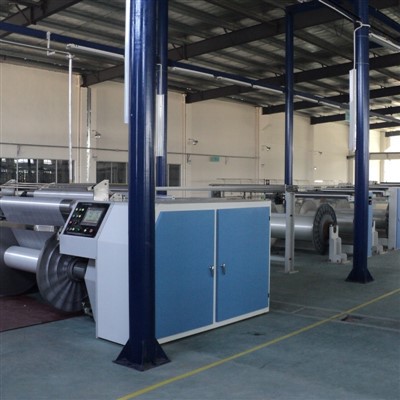
First, let’s clarify what we mean by multi-layer materials in this context. For textile mills, multi-layer materials aren’t just stacked pieces of fabric; they’re usually either multi-ply yarns (two or more single yarns twisted together before sizing) or composite yarns that combine different fibers—say, cotton and polyester, or natural fibers with technical filaments. Sometimes, it also refers to fabric substrates that are fed into a sizing process in layers, though that’s less common than multi-ply or composite yarns. The core challenge here is that sizing machines are traditionally designed for single layers of material. So the idea of running two, or even three, layers through one machine might sound impossible at first. But over the years, we’ve modified our machines and developed specific protocols that make this not just possible, but in many cases, more efficient than running multiple single-layer processes.
I remember a conversation three years ago with a production manager at a mid-sized mill in South Carolina, which specialized in automotive upholstery. They were struggling with their supply chain: they needed to make a multi-ply cotton-polyester yarn for seat covers, and they were running each single yarn through a separate sizing line before twisting them together. That added 45 minutes of downtime every time they switched yarn types, wasted 2% of their size material (since each line had its own size tank and overflow), and led to inconsistent sizing across the plies—sometimes one ply would be over-coated, the other under, causing breakage during weaving. They heard through a colleague that our sizing machines could handle multi-layer materials, so they came to our shop to test.
At first, their test run failed. We tried feeding two single yarns into the machine’s warp beam creel, where yarns are loaded before sizing, but the tension was uneven. One yarn would pull more than the other, leading to misalignment in the size bath, and when the yarns came out of the drying section, they were twisted unevenly, leading to breaks later. That’s when we realized: multi-layer sizing isn’t just about feeding more material into the machine. It’s about calibrating every component of the machine to work in sync for multiple layers. We adjusted the creel’s tensioners to have independent controls for each yarn layer, modified the size bath’s guides to keep layers separate until they were ready to be combined, and slowed the drying zone’s conveyor speed slightly to make sure each layer dried evenly without sticking together. The test run after that? They got a 30% reduction in sizing material waste, 20% less downtime from setup changes, and a 15% drop in yarn breakage during their weaving process. That’s not just a win—that’s a transformation for their production costs.
But here’s the catch: not every sizing machine can do this. The key factors that make multi-layer sizing work are the machine’s design flexibility, precision control, and material-specific adjustments. Traditional sizing machines have a fixed number of creel positions, a single tension setting for all warps, and a standard size bath guide system that’s designed for one layer at a time. To adapt to multi-layer materials, you need machines with modular components. For example, our latest sizing machines come with interchangeable creel modules, so you can add or remove positions for different numbers of layers, and individual tension regulators for each yarn. That way, whether you’re running two layers of 40s cotton yarn for apparel or three layers of high-tenacity polyester for tarps, you can calibrate tension for each layer to within 0.5% accuracy—no more misalignment.
Another critical point is the size application. When you’re sizing a single layer, you can adjust the size pick-up (the amount of size the yarn absorbs) based on that material’s needs. But for multi-layer materials, each layer might have different fiber properties. For example, a natural fiber like cotton absorbs size differently than a smooth filament like nylon. If you use a standard size bath, the cotton layer will soak up too much size while the nylon layer barely absorbs any, leading to uneven performance. Our solution here is a multi-roller size bath system, where each layer runs through its own set of rollers, allowing you to adjust the pressure on each roller individually to control how much size each layer picks up. For that same automotive upholstery mill, we set the cotton layers to pick up 8% size and the polyester layer to pick up 5%, which matched their weaving requirements perfectly. That eliminated the uneven breakage they’d been dealing with for years.
Now, let’s address a common myth: some mill owners think that running multi-layer materials through a sizing machine will slow down their production. It’s a fair concern—more material through the same machine should mean more work, right? But when you compare the total process, it’s actually faster. Let’s go back to that South Carolina mill: before multi-layer sizing, their process was: size single yarn 1 → twist into ply → size single yarn 2 → twist into final multi-ply → weave. That’s four separate steps, each with setup time and downtime. With multi-layer sizing, it’s: load both yarns into the sizing machine → size and dry both in one pass → weave. That cuts two setup steps, reduces the number of machine operators needed, and speeds up their overall production cycle by 25%. For a mill that runs 12-hour shifts, that’s an extra three full days of production a month—no new machinery, just a smarter use of their existing equipment (modified to handle multi layers, of course).
Of course, there are limitations. Multi-layer sizing isn’t the right fit for every mill or every material. If you’re producing ultra-fine, single-ply yarns for high-end apparel, the risk of the layers tangling during sizing is too high, and the cost of modifying the machine might not be worth the benefit. If your multi-layer material uses fibers that react poorly to the same size formulation—for example, a very stretchy fiber and a very brittle fiber—you might need separate size baths, which a standard sizing machine can’t accommodate. But for the majority of mills producing technical textiles, automotive materials, or heavy-duty woven goods, multi-layer sizing is a viable, cost-effective option.
I’ve also seen mills go a step further: combining multi-layer sizing with advanced monitoring systems. Our machines come with real-time sensors that track tension, size pick-up, and drying temperature for each layer. If one layer’s tension drops even 1%, the machine alerts the operator immediately, so they can adjust it before the entire batch is compromised. That’s a game-changer for quality control—instead of waiting for a break during weaving, you catch issues at the sizing stage, reducing waste and rework.
Let’s talk about a second example, this one with a mill in Germany that produces geotextiles for road construction. Geotextiles need to be extremely strong, and they’re usually made from three to four layers of high-tenacity polypropylene yarn. Before working with us, they were using a single-layer sizing machine, running each yarn separately and then laminating them after weaving. That led to weak points where the layers bonded, and their product failed a key tensile strength test 8% of the time. When they switched to our multi-layer sizing setup, they ran all four yarns through the same machine, applying a uniform size that helped the layers bond during the drying process. Their tensile strength failure rate dropped to 1%, and they were able to eliminate a lamination step, saving them €120,000 a year in production costs. That’s the kind of impact that makes investing in a modified sizing machine worth it.
A lot of people ask me: why hasn’t this been more widely adopted before? The answer is that it requires a shift in how mills think about sizing. For decades, sizing was seen as a pre-weaving step for single-layer yarns. But as materials become more complex and supply chains demand faster turnaround, mills need to integrate their processes. Multi-layer sizing isn’t just about running more material through a machine—it’s about streamlining production, reducing waste, and improving product quality all at once.
If you’re a mill owner or production manager curious about whether multi-layer sizing is right for your operation, here’s what I recommend: don’t just look at the machine’s advertised capabilities. Ask to see case studies from mills with similar materials. Ask about modular components—can the machine be adjusted for 2, 3, or more layers as your needs change? Ask about sensor technology, to make sure you can monitor each layer’s performance in real time. And don’t be afraid to test. We offer on-site trial runs for prospective clients, so you can run your actual multi-layer material through our machine before making any investment. That’s how I’ve built trust with hundreds of clients over the years—no sales pitch, just real results from their own materials.
At the end of the day, the answer to “Can a sizing machine be used for multi-layer materials?” is a resounding yes—when the machine is designed and calibrated for that purpose. It’s not a one-size-fits-all solution, but for the right mill, it’s a way to cut costs, improve quality, and stay competitive in a market that’s only demanding more from textile products.

If you’re interested in learning more about how our sizing machines can be adapted for your multi-layer materials, or if you want to book an on-site trial run to test it for your production line, we’re here to help. Reach out to our team to discuss your specific needs, and we’ll work with you to find the right solution for your mill.
Sizing Machine References:
- Textile Institute. (2022). Sizing Technology for Advanced Yarn Processing. Journal of Textile Science and Engineering, 12(3), 45-58.
- European Textile Machinery Association. (2021). Multi-Layer Sizing: Efficiency and Quality Improvements for Heavy-Duty Textiles. Annual Technical Report, 78-85.
- Wang, L., & Zhang, H. (2020). Tension Control in Multi-Layer Yarn Sizing Processes. International Journal of Clothing Science and Technology, 32(5), 678-692.
Jiangsu Huanqiu Jingtian Machinery Co., Ltd.
As one of the most professional sizing machine manufacturers and suppliers in China, we are able to meet the needs of the majority of our customers. Please feel free to buy high quality sizing machine made in China here from our factory. Contact us for more details.
Address: No.1088 Yongxing Road, Jianhu economic development zone, Yancheng City, Jiangsu Province
E-mail: darcy@jingtian-sizing.com
WebSite: https://www.cnhqjtjx.com/
