If you’ve ever hauled livestock feed bags from a farm supply bin to a barn, you’ve likely noticed two common scenarios: either the bag holds up through a week of rainy weather, rough loading, and being dragged across concrete, or it splits open mid-pour, spilling expensive grain all over the ground. As someone who’s spent the last 12 years selling livestock feed composite bags to small family farms and large commercial feed mills across the Midwest, that split-second decision between a bag that works and one that fails is the core of what I do. Most farmers don’t ask about “durability” until it’s too late—until they’re wiping corn off the barnyard or replacing a bag that broke while being loaded onto a semi. Today, I want to break down what actually defines the durability of these bags, how it’s tested, and what you should look for when buying them. Livestock Feed Composite Bags
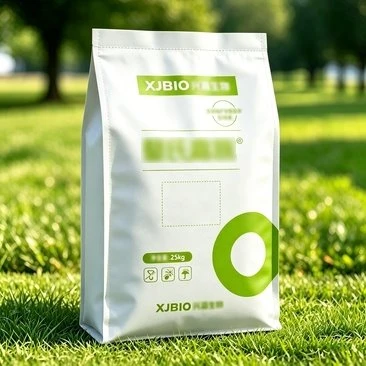
First, let’s get one thing straight: durability isn’t a one-size-fits-all number. A 50-pound bag of cattle feed for winter has totally different needs than a 1,000-pound bag of mineral supplement for show goats, and a bag used in dry Arizona dust won’t hold up the same as one used in the humid Pacific Northwest. The composite structure is where it all starts—these bags aren’t just thin plastic or woven paper. Most quality livestock feed composite bags are made of three layers, each with a specific job: an inner polyethylene (PE) liner to keep moisture out, a middle woven polypropylene (PP) layer for tensile strength, and an outer print layer that resists UV light and scuffs from farm equipment. That combination is way stronger than a single layer, but the thickness and quality of each layer make all the difference.
I’ve seen too many cut-rate suppliers cut corners here. Last year, a small hog farm I’ve worked with for 8 years switched to a cheaper bag from a new vendor because they saved a penny per unit. Within three months, 12% of their 40-pound starter feed bags split during delivery—most broke when the delivery driver slammed them onto the back of a pickup. When I went to check, I could see the middle woven PP layer was only 60 grams per square meter (gsm) instead of the standard 80 gsm we use, and the inner liner was thin enough that I could tear it with my fingernail. That’s the kind of cost-cutting that costs farmers more in spoiled feed, labor to clean up messes, and lost product than any per-unit savings.
So how do we actually test durability, instead of just guessing based on thickness? As a supplier, we work with third-party testing labs to run five key tests, and I make sure every client gets a copy of the test results for their specific bag style—no fine print, no jargon. The first is the tensile strength test, which measures how much force a bag can take before it tears. For standard 50-pound feed bags, that number needs to be at least 250 Newtons in both vertical and horizontal directions; if it’s lower, it’ll snap when you lift it by the corners or stack it 10 bags high in a warehouse. We’ve had a lab test a client’s old bag that only hit 180 Newtons—no wonder they had so many stack collapses in their feed storage.
Next is the puncture resistance test. Livestock farms have sharp stuff everywhere: metal fence posts, broken concrete, even the hooves of cows nudging bags around the bin. This test uses a weighted needle pushed into the bag at a set speed, and we need at least 15 Newtons of force to pierce a standard inner liner. I remember one rainy spring when a show horse farm called me in a panic—their 50-pound alfalfa bags were getting punctured by nail heads sticking out of their feed bin. The bag they were using only hit 10 Newtons on the puncture test, so we switched them to a bag with a thicker inner liner and reinforced PP layer, and they didn’t have a single puncture issue that season.
Moisture resistance is another part of durability that’s easy to overlook, especially for farmers who store feed outside or in unheated barns. A composite bag isn’t waterproof, but a good inner liner should have a moisture vapor transmission rate (MVTR) of less than 5 grams per square meter per day. If that rate is higher, moisture will seep in even through tiny holes, turning fine grain into mold that makes it unsafe for livestock. Last winter, a cattle ranch in Nebraska had a problem with moldy feed after a week of snowmelt seeping into their storage shed; their bag’s MVTR was 12 g/day—more than double what it should be. When we switched them to our standard liner, their feed stayed dry through three more weeks of melting snow.
UV resistance is huge for farmers who leave bags sitting outside for days or weeks waiting to be used. The outer layer of a composite bag can start to break down after just 40 hours of direct sunlight if it’s not treated with UV stabilizers. I’ve seen bags that looked fine when loaded, but after sitting on a farm driveway for three days, they crumbled when someone tried to lift them. Our bags have a UV inhibitor additive that lets them hold up for at least 120 hours of direct sun—enough to cover a few days of waiting for delivery or bad weather, which is a common scenario on many farms. We tested this last summer in Arizona, where temperatures hit 110 degrees; after 5 days of being outside, our bags still had 80% of their original tensile strength, while a competitor’s bag only had 35%.
Finally, there’s the drop test, which is the real-world test that tells you if a bag will survive being tossed around during loading and delivery. We drop a filled 50-pound bag from 3 feet high—about the height of a typical delivery truck bed—onto concrete, wood, and gravel. A durable bag will not split, spill any product, or have any stretched seams. A bad bag will split open on the first drop. I’ve had delivery drivers tell me they’ve seen bags split when dropped from just 2 feet, which is why we make sure every batch we sell passes this test 100% of the time.
Now, durability also depends on how the bag is used, which is something I always explain to clients when they ask. If you stack 50 bags 20 high, even the strongest bag will eventually tear under the weight—no bag is designed for that. If you drag a bag across a gravel parking lot, that will cause more wear than carrying it gently. But what a good composite bag does is minimize the risk from normal farm wear and tear, so you don’t have to worry about it failing when you need it most.
I’ve worked with so many clients over the years who think they’re saving money by buying cheaper bags, only to end up paying more in the long run. Let’s do the math: a standard 50-pound bag for corn feed costs about $0.80 per unit, while a cut-rate bag is $0.70. If you order 10,000 bags, that’s $1,000 saved upfront. But if 5% of those bags split during delivery, that’s 500 bags spilling feed—at $15 per 50-pound bag, that’s $7,500 in lost product, plus labor to clean up, plus delays in feeding livestock. That’s a $6,500 loss for a $1,000 “savings.” I’ve seen this happen more times than I can count, which is why we focus on making durable bags that don’t lead to those hidden costs.
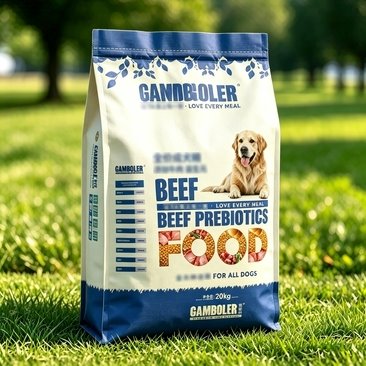
One thing I’m proud of is that we make custom composite bags too, not just standard sizes. A client who makes custom mineral supplements for show horses needed a bag that would hold 25 pounds, but also be narrow enough to fit through a small feed bin chute. We adjusted the PP layer thickness and the liner width to make the bag both strong and the right size, and they haven’t had a single split issue in two years. Another client in Alaska uses our bags for their winter hay pellets, which have to hold up to freezing temperatures and being dragged across frozen ground. We added an extra layer of polyethylene to the inner liner, and their bags don’t crack even when temperatures drop to -20 degrees Fahrenheit.
If you’re a farmer or feed mill owner who’s dealt with split bags, spoiled feed, or excess costs from low-quality packaging, I know how frustrating that is. Durability isn’t just a number on a spec sheet—it’s about showing up when you’re up to your elbows in feed, trying to keep your livestock fed and your operation running smoothly. I’ve been in your barns, I’ve seen the mess, and I’ve built our business on making bags that make that part of the job a little easier.
Livestock Feed Woven Bags If you’re looking for livestock feed composite bags that actually hold up to real farm conditions, I’d be happy to talk through your specific needs—whether you need standard sizes, custom dimensions, or bags that work for humid, dry, cold, or sunny climates. Let’s skip the jargon, cut the cost-cutting corners, and find a solution that works for your operation. There’s no use in wasting time on bags that fail when you need them most.
References
- American Society for Testing and Materials. (2021). Standard Test Methods for Tensile Properties of Plastic Sheeting and Film. ASTM D882.
- National Agricultural Packaging Association. (2022). Durability Guidelines for Bulk Feed Packaging. NAPA Technical Report Series.
- International Organization for Standardization. (2020). Plastics – Determination of Water Vapor Transmission Rate of Plastic Film and Sheeting. ISO 2528.
- University of Extension Services, Iowa State University. (2023). Farm Packaging Best Practices: Minimizing Feed Spoilage and Loss. Iowa State University Extension Publication.
- Western Regional Agricultural Center. (2022). UV Resistance Testing for Agricultural Packaging in Arid Climates. WRAC Technical Bulletin 17-04.
Zhejiang Xifeng Packaging Co., Ltd.
We are one of the most experienced livestock feed composite bags manufacturers and suppliers in China. With a professional production team, we offer a wide range of products with superior quality. Please feel free to buy bulk livestock feed composite bags at competitive price from our factory. We also accept customized orders.
Address: Xiaojiang Town, Pingyang County, Wenzhou City, Zhejiang Province, China
E-mail: zjxifeng@126.com
WebSite: https://www.xifengpackaging.com/
