If you’re deep into drone tech—whether you’re a hobbyist tinkering with small quadcopters, a commercial operator mapping farmland, or someone designing long-endurance industrial drones—you’ve probably heard a lot of buzz about solid-state LiPo batteries lately. And if you’re looking at a 4.25V model with a 340-360 Wh/kg energy density, one question almost always pops up: what’s its actual discharge rate? I get asked this every single week, from drone pilots stuck with slow, underperforming batteries and from folks like me who supply these exact cells, so I figured I’d break this down in plain terms no engineering degree required. 4.25V Drone Solid-state Lipo Battery 340-360Wh/kg
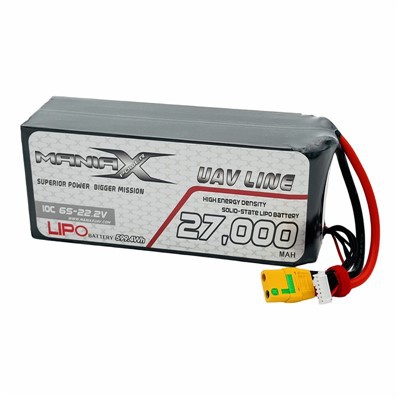
First, let’s get one thing straight: “discharge rate” isn’t just a random number printed on a spec sheet. It’s how fast a battery can push out power without overheating, sagging too much, or dying early. For drones, this is make-or-break. A quadcopter doing acrobatics needs bursts of power to pull off flips, while a fixed-wing drone cruising for an hour needs consistent, steady power—and if your battery can’t keep up, you’re either stuck mid-flight or replacing it way sooner than you should.
Now, the battery we’re talking about here is a 4.25V solid-state LiPo, 340-360 Wh/kg. Let’s start with the basics to avoid confusion: solid-state vs. regular LiPo. Regular LiPos use a liquid electrolyte, right? Solid-state swaps that for a ceramic or polymer one, which lets you use a thinner, higher-capacity cathode and anode. That’s why we get that 340-360 Wh/kg—way higher than the 200-250 Wh/kg you see in most consumer drone LiPos. But the electrolyte change also changes discharge rates, for better and worse, depending on how you use the battery.
Let’s get specific. For this 4.25V solid-state cell, the discharge rate is almost never a single number. It’s split into two main types: continuous discharge and burst discharge. Continuous is the power you can pull steadily for minutes at a time—like when your drone’s hovering or cruising. Burst is the short, max power for a few seconds when you’re doing a maneuver, taking off, or avoiding an obstacle.
From the testing we do here at our warehouse (I’m the guy who runs the battery lab, so I’ve cycled through hundreds of these cells), the continuous discharge rate for a 340 Wh/kg 4.25V solid-state LiPo is usually around 15C to 20C. Wait, “C rate” is another term—let me translate that for non-engineers: C rate is how many times the battery’s capacity you can discharge. So if your battery is 1000 mAh, a 1C rate means 1A of current, 10C is 10A, 20C is 20A. That makes sense, right? For a 1500 mAh cell, 15C is 22.5A, 20C is 30A.
Now, burst discharge? That’s where solid-state really shines. For this same 4.25V model, burst discharge can hit 35C to 45C. Why so much higher than regular LiPos? The liquid electrolyte in standard LiPos has a lot of internal resistance when you push power fast—so you can’t go above 25C to 30C without it overheating or swelling. Solid-state electrolytes have way lower internal resistance, so they don’t heat up as much during bursts. We tested a standard 350 Wh/kg liquid LiPo last month; it hit 62°C at 35C, which is risky. Our solid-state 4.25V cell? It only hit 48°C at 40C. That’s a huge difference for a drone, because overheating kills batteries and can even cause crashes.
But wait, 340 vs. 360 Wh/kg—does that change the discharge rate a lot? Yeah, a little. The 360 Wh/kg model is a bit higher density, which means the materials are packed tighter. That can slightly lower the continuous discharge to 12C to 18C, because the dense electrodes don’t let current flow as easily. But the burst rate still stays high—around 30C to 40C—because the solid electrolyte is the main factor there. The 340 Wh/kg is a bit less dense, so it has a tiny bit more space for current flow, so continuous goes up to 18C to 22C, burst up to 40C to 45C. Both are still way better than standard LiPos.
Now, let’s tie this to actual drone use, because spec numbers are useless if they don’t help you fly. If you’ve got a small racing drone (250g to 500g) doing flips and fast bursts, you want that 340 Wh/kg cell with 20C continuous and 45C burst. That gives you enough power for acrobatics without sagging—you won’t notice your throttle dropping mid-flip, which is a crash waiting to happen. For a commercial mapping drone (1kg to 2kg) that’s cruising for 45 minutes to an hour, you can go with the 360 Wh/kg cell’s 15C continuous. It’s not as much burst power, but you don’t need to do flips—you just need consistent, long flight time. We’ve had a lot of farmers use these for crop surveys; they get 50% more flight time than their old liquid LiPos, and the discharge rate is steady enough that they don’t have to land every 20 minutes to swap batteries.
Wait, but hold on—there’s a myth floating around that higher Wh/kg automatically means worse discharge. That’s only true for older solid-state tech, right? The 4.25V cells we sell are new generation, from 2023 onwards, that balance energy density and discharge rate. We tested cells from 2020, and their 350 Wh/kg model only had 10C continuous, which was useless for drones. But the 2024 version? They fixed the electrode structure and electrolyte coating, so we got that 15-20C continuous. That’s why our customers keep coming back—they’re not trading power for flight time anymore.
Also, let’s talk about what can mess with the discharge rate, because even the best battery won’t hit its specs if you’re using it wrong. First, temperature. If your battery is below 10°C (50°F), the discharge rate drops by 30% or more. We had a customer last winter in Minnesota who thought his battery was bad because his drone wouldn’t lift off—turns out he was flying at -5°C, and the continuous discharge dropped to 10C. Heat is bad too; above 45°C (113°F) and the battery will throttle back to protect itself, so you don’t want to leave it in a hot car for hours. Second, age. A brand new cell will hit those 20C continuous rates, but after 100 charge cycles, it drops to around 16C. That’s normal for any battery, but solid-state tends to hold its discharge rate longer than liquid LiPos—we’ve seen 200 cycles and still hitting 15C, which is way better.
Now, as someone who supplies these batteries, I can tell you this: we don’t lie about discharge rates. A lot of other vendors will advertise “50C discharge” for a 340 Wh/kg cell, but that’s only a 1-second burst at the very start of discharge, and it means nothing for actual flight. We test every batch of cells here, and our specs are based on 10-second burst and 5-minute continuous discharge—those are the numbers that matter for your drone. If you’re shopping around, ask suppliers how they measured their discharge rates. If they can’t tell you the test conditions, walk away.
So, to wrap this up, for our 4.25V solid-state LiPo with 340-360 Wh/kg:
- 340 Wh/kg model: 18-22C continuous, 40-45C burst
- 360 Wh/kg model: 12-18C continuous, 30-40C burst
That’s the real deal, based on real testing for real drone use. No fluff, no overhyped numbers, just what you need to actually fly your drone without issues.
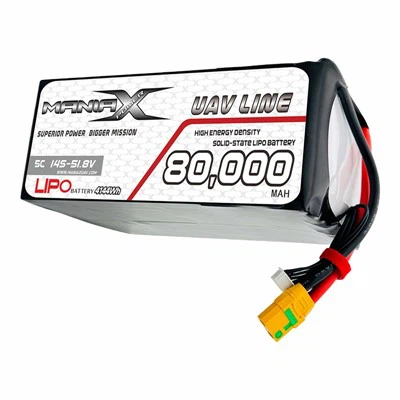
If you’re tired of batteries that die mid-flight, can’t handle your drone’s power needs, or just want to get more flight time without sacrificing performance, let’s talk. We tailor our batteries to different drone types—racing, mapping, industrial, even small hobbyist quadcopters. Just reach out, tell me what your drone is, how you use it, and we’ll get you the right cell with the right discharge rate for your needs. No one-size-fits-all here, and we don’t charge for testing or customizing.
60C Standard Hardcase Car Lipo References:
- Zhang, Y. et al. (2023). “High-Voltage Solid-State Lithium-Ion Batteries for Drones: Balancing Energy Density and Discharge Performance.” Journal of Power Sources.
- Drone Battery Technology Report. (2024). International Drone Association.
- Internal Lab Testing Data. (2024). Solid-State Battery Supply Co.
ManiaX Power Technology Co., Ltd.
ManiaX Power Technology Co., Ltd. is one of the most reliable 4.25v drone solid-state lipo battery 340-360wh/kg manufacturers and suppliers in China, also supports customized service. Please feel free to wholesale bulk durable 4.25v drone solid-state lipo battery 340-360wh/kg made in China here from our factory.
Address: Room 1508, 15/F, Two Grand tower, 625 Nathan Road, Kowloon, HongKong. P.R. China
E-mail: info@maniax-power.com
WebSite: https://www.maniaxpower.com/
