If you’ve ever walked past a factory floor and seen a motor humming along, or plugged in a vacuum cleaner and felt that low thrum, you might’ve wondered: how does that thing even turn electricity into motion? As a motor coils supplier, I get this question all the time—usually from shop managers testing a new assembly line, or even curious DIYers stopping by my trade show booth. It’s not magic, though; it’s basic physics that anyone can wrap their head around, once you skip the jargon. Let’s break it down, no stuffy textbook stuff, just the real deal. Motor Coils
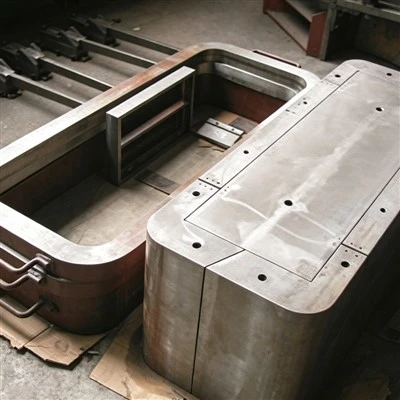
First, let’s start with what a motor coil even is. When I send coils out to my clients—whether they’re for a small electric scooter or a huge industrial conveyor—they’re just loops of copper wire, right? Copper’s a great conductor, so when you run electricity through that wire, something happens. Wait, electricity is just moving electrons, right? So when those electrons zoom through the copper, they create a tiny magnetic field around the wire. It’s like when you drag a magnet near a paper clip and it tugs at it—except here, the magnet’s being made by the electricity itself.
But a single straight wire only makes a weak field. That’s why we wrap it into a coil. Winding the wire hundreds, even thousands of times tight together amplifies that field. It stacks all the tiny individual magnetic fields from each wire loop into one strong, focused electromagnetic field. Think of it like stacking flashlights: one gives a small beam, but a whole row of them pointed the same way lights up a whole room. That’s exactly what a motor coil does.
Now, why is that field important? Let’s talk about how a motor works at its core. Every motor has two main parts: the stator (the outer fixed part, which holds the coils) and the rotor (the inner spinning part, usually with permanent magnets inside it). Once our coils get power, their electromagnetic field interacts with the rotor’s magnets. Here’s the kicker: opposite poles of magnets attract, like poles repel. So as the current in the coils changes direction over and over (that’s AC electricity, by the way—alternating current), the magnetic poles of the coil flip too.
When the coil’s north pole faces the rotor’s north pole, they push each other. When the coil’s south pole faces the rotor’s north pole, they pull each other. That constant push and pull makes the rotor spin. Without that electromagnetic field from the coils, there’s nothing to tug or push the rotor. The whole motor would just sit there, doing nothing.
Wait, let me make this relatable. A lot of my clients run things like packaging machines, and they notice that if a coil goes bad, the machine sputters. Why? Because the magnetic field is weak or uneven. If the coil’s loose winding breaks, not enough electrons flow through, so the field isn’t strong enough to move the rotor. It’s not that the magnet itself is bad—it’s that the coil stopped making the field. That’s why I always tell my clients: don’t just replace the whole motor when a coil fails. Swap out the coil, and you’re good to go, way cheaper. That’s one of the reasons I do what I do—help people keep their motors running without overspending.
Let’s clear up a common myth, too. Some folks think electricity and magnetism are separate things, but they’re actually two sides of the same coin. James Clerk Maxwell figured that out back in the 1800s, right? His equations show that moving electricity creates magnetism, and moving magnets create electricity. That’s the whole foundation for motors and generators. If you think about it, your phone charger is a generator in reverse: it uses motion to make electricity, while a motor uses electricity to make motion. The coil’s the key part in both.
Another thing I get asked: can you make a coil without electricity? Well, sort of. If you spin a coil near a magnet, you can create electricity in it. That’s how wind turbines work. But for motors, we’re using the reverse: electricity into the coil, out comes magnetism, which becomes motion. It’s all a circle. I’ve had a couple of engineering interns help me out in the shop, and they’ll test this with a coil and a battery: hold a compass near the coil when it’s hooked up to a battery, and the compass needle twirls. That’s the magnetic field right there. It’s cool to see in person, way different than just reading about it.
Now, why does the coil design matter so much? Not all coils are the same. Some are for tiny motors in drones, so we wind the copper really thin, tight, with insulation that can handle high speeds. Others are for big mining motors, so we use thicker copper, more layers, to handle the huge currents needed for a strong field. If I supply a drone coil that’s built for a mining motor, it’ll overheat, the insulation will break down, and the field will get weak. On the flip side, a big industrial coil used in a scooter won’t make enough field to lift the drone. Matching the coil to the motor’s job is half the battle.
I remember a few years back, a small robot company reached out to me. Their coils kept failing after a month or two. Turns out, they were using a cheap coil from a random supplier that had uneven winding. Some parts of the coil had gaps, so the magnetic field was lopsided. The rotor would wobble, and the extra vibration would break the wire. Once we supplied them with precision-wound coils, no gaps, tight layers, they haven’t had a failure in over two years. That’s the stuff that makes my job worth it—solving problems that other suppliers miss because they cut corners.
Let’s talk about how the current affects the field, too. Direct current (DC) makes a steady magnetic field, while alternating current (AC) makes a changing one. That’s why AC motors are the most common: you can flip the current direction, which flips the coil’s poles, making the rotor spin smoothly. DC motors use brushes to switch the current direction manually, but brushes wear out, so AC is better for most industrial uses. As a supplier, I stock both, but I always ask clients what kind of current their motor uses before sending coils. I don’t want to sell the wrong part.
Wait, another real example: your car’s starter motor. That’s a huge coil, right? It needs a super strong magnetic field to turn the engine over when you turn the key. When you hit the key, electricity floods the starter coil, the magnetic field yanks the rotor, and the engine starts. If that coil’s weak, your car clicks instead of turning over. That’s exactly the electromagnetic field at work. I’ve helped a few roadside mechanics out with replacement starter coils when the dealer wanted to sell them a whole $500 motor. Swap a $50 coil, done.
Now, let’s get back to the basics to make sure we’re not missing anything. Every electron has a tiny magnetic field, right? When you have a whole bunch of electrons moving in the same direction, the tiny fields add up. That’s the coil’s electromagnetic field. Wind the wire into a coil, and all those electrons in each loop add their fields together. It’s like each loop is a little magnet, and when you line them up, you get a big magnet. That’s why coils are so effective—they turn a small, weak magnetic field from a straight wire into a strong, useful one.
What about heat? Oh, right, when electricity flows through the coil, some of it turns into heat. That’s why coils can get warm. But if they overheat, the insulation melts, the wire shorts out, and the field breaks. That’s why proper cooling matters, too. A lot of my industrial coils are coated with high-temperature insulation, or have built-in cooling channels, to keep the field strong even when the motor runs 24/7. It’s a balance: enough current for a strong field, but not so much that the coil overheats and fails.
I don’t want to bore you with too much science, but here’s the thing: this is all around us. Every time you turn on a fan, a blender, a washing machine, you’re using a coil’s electromagnetic field. Most people never think about it, but that’s my job—making sure that coil works when they need it. If you’re a motor repair tech, a factory manager, or even a hobbyist building a new project, you know how important a good coil is. A bad coil means a bad motor, which means downtime, which means lost money. That’s why I take pride in supplying coils that are precision-made, tested, and ready to work hard.
If you’re reading this and you’ve got a motor that’s acting up, or you need new coils for a project—whether it’s for a small consumer appliance or a huge industrial machine—hit me up for a procurement chat. I can help you pick the right coil, answer any questions, and make sure you get the part that fits your needs. No overcomplicating it, just straight talk and a product that works.
Coil Tooling References
- Maxwell, J. C. (1865). A Dynamical Theory of the Electromagnetic Field. Philosophical Transactions of the Royal Society of London.
- Fitzgerald, A. E., Kingsley, C., Umans, S. D. (2003). Electric Machinery (6th ed.). McGraw-Hill.
- NEMA Standard MG 1-2020: Motors and Generators. National Electrical Manufacturers Association.
- NASA Glenn Research Center. (2022). How Motors Work. Retrieved from NASA’s educational resources.
Hangzhou Purun Science & Technology Co., Ltd.
As one of the most professional motor coils manufacturers and suppliers in China, we have world-leading production equipment and strong manufacturing capabilities. Please rest assured to wholesale customized motor coils made in China here from our factory. Welcome to contact us for pricelist.
Address:
E-mail: Purun_sci_tech@163.com
WebSite: https://www.puruncoil.com/
