If you’ve ever glanced at your prepaid energy meter and spotted a negative balance staring back at you, it’s natural to feel confused, frustrated, or even concerned. As a prepaid energy meter supplier with over a decade of experience supporting residential and small business customers across North America, I’ve fielded this question from hundreds of users, and I’m here to break down why this happens—no jargon, just real, practical explanations that make sense. Let’s start with the basics: your prepaid meter is designed to track energy you use against the credit you’ve added, right? So a negative number shouldn’t happen. But it does, and almost always for one of six common, fixable reasons. Prepaid Energy Meter
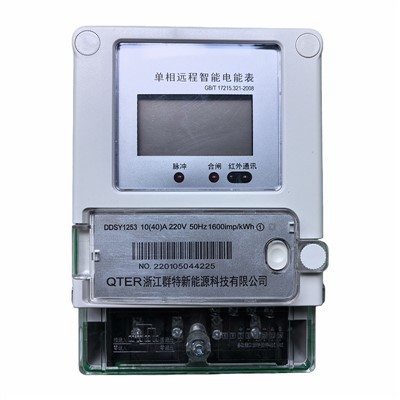
First, let’s talk about the most frequent culprit: delayed billing or usage calculation delays. Wait, hold on—prepaid meters are supposed to update in real time, right? Well, not always. Some older meter models, or meters installed in areas with spotty network connectivity (think rural neighborhoods with weak cellular or radio signals that the meter uses to sync with our supplier’s system), don’t transmit usage data every few minutes. Instead, they batch updates every 15, 30, or even 60 minutes. That delay means if you run a high-energy appliance—like a space heater, electric water heater, or clothes dryer—right before the next update, you could use more energy than your last sync showed, pushing your balance negative. For example, last winter I spoke to a family in western Pennsylvania who ran their space heater nonstop during a 24-hour cold snap. Their meter only updated once every two hours, so when they checked 20 minutes after an update, they had $10 left. By the time the next sync rolled around, they’d used $12 worth of heat, leaving them with a -$2 balance, and they got an error alert because the system needed to top up their credit immediately. Now, newer smart meters we install for most new customers sync every 5 minutes, which eliminates most of this lag, but it’s still a common issue for legacy meter setups.
Second, there’s the threshold for low-balance alerts. Let’s set the scene: most prepaid systems are programmed to send a warning when your balance drops to $5 or $10, right? The idea is to give you time to add credit before you lose power. But here’s the fine print: that warning balance is separate from the actual “zero threshold” your set needs to hit before service is interrupted. Some systems have a built-in buffer zone of a few dollars to cover that delay in usage calculation we just talked about. So if your buffer is $5, and you run a big appliance that uses $7 worth of energy, you dip below the zero threshold, resulting in a negative balance. It’s not a mistake—it’s a safety net built into the system to make sure you don’t get cut off mid-shower or when your freezer’s full of groceries. I’ve had customers email us panicking about a -$3 balance, and when we pull their meter data, we see that their buffer was set to $5, and their last usage spike pushed them just past that line. That’s a simple fix: most customers can adjust their buffer setting through their online account or by calling our support team to make it smaller, or even turn it off entirely if they prefer more real-time accuracy.
Third, there’s a quirk in how meter display works, not the actual account balance. This one trips up so many new users, so let’s get clear: the number on your meter display isn’t always your total account balance. Wait, what? Let me explain. Some meters have a temporary display that shows your “pending usage” alongside your actual available balance. For example, if you have $20 in your account, and you’ve used $3 worth of energy since the last sync, the display might show -$3 next to “current usage” and $20 next to “available balance.” But if a user accidentally presses the “usage history” button on the meter, it might default to showing that temporary number instead of the real balance. I remember a customer last year who came into our office in Ohio, waving their meter, saying they were -$4 and about to lose power. When we pulled their account info, they had $22 in credit, and the display was just stuck on the temporary usage reading. We walked them through how to switch back to the balance display, and they left embarrassed but relieved. It’s a simple button mix-up, but it’s the reason for a lot of “negative balance” panic.
Fourth, there’s the issue of early termination fees or service charges being added to your account. Prepaid energy plans aren’t just for usage—they have recurring fees too, and sometimes those get applied automatically, pushing your balance negative. For example, some plans charge a monthly service fee of $8, which is deducted from your credit regardless of how much energy you use. If you add $10 of credit on the first of the month, you use $2 of energy that day, and then the $8 service fee is applied, that’s $10 – $2 – $8 = $0, right? But if you add $9 instead, it becomes $9 – $2 – $8 = -$1. That’s not because you used more energy than you paid for—it’s because the monthly service fee ate into your credit. I always advise customers to check the fine print of their plan when they sign up, and to add a little extra credit (like $5 or $10) to cover these recurring fees if you’re on a tight budget. We also email customers a week before service charges are applied each month, so if you get that email, that’s a good reminder to check your balance.
Fifth, and this one is less common, there’s a meter calibration error. Prepaid meters, like any electronic device, can have glitches over time, especially if they’re exposed to extreme temperatures, dust, or physical damage. A mis calibrated meter might undercount your usage for a week or two, and then when it finally syncs, it calculates the backlogged usage all at once, pushing your balance negative. For example, a small business customer in Texas called us last summer, saying their meter went from a $15 balance to -$180 in one sync. When our technician came out to check the meter, we found it had been installed near a window that got direct sunlight every day, which warped the internal wiring and threw off the usage readings. The meter had been undercounting AC usage for three weeks, so when it finally corrected, the backlogged amount pushed their balance negative. That’s a fix we can handle quickly—we replaced the meter for free and adjusted their account balance to cover the overcounted usage, so they didn’t have to pay the negative amount. Calibration errors are rare, but they’re something to keep in mind if you see a sudden, huge negative balance with no other explanation.
Sixth, the final reason, and the most rare of all: incorrect credit top-ups or account admin errors. Sometimes, when you add credit to your account, the transaction doesn’t process correctly, or it’s applied to the wrong account. For example, a customer in Michigan tried to add $50 of credit using their bank account, but the payment got declined, and a duplicate $50 transaction went through by accident. So their account went from $0 to -$50, because the system saw two $50 charges instead of one. Or sometimes, a support agent might accidentally apply a credit correction to the wrong customer’s account. These errors are almost always fixed within 24 hours, and we notify customers immediately when we spot them, but they do happen occasionally. The best way to avoid this is to check your account balance online or through our app within 10 minutes of adding credit to make sure it’s applied correctly.
Now, as a prepaid energy meter supplier, I want to be clear: a negative balance is never a penalty, and it’s not something to panic about. It’s usually a small, fixable issue, and most of the time, it doesn’t result in immediate power cut-offs—we have systems in place to alert us when a balance is negative, and we work with customers to resolve it before that happens. If you do see a negative balance on your meter, the first step is to check your online account or our app to confirm the real balance, not just the temporary display reading. Then, if you’re still confused, reach out to our support team—we’re available 7 days a week, and we can pull your meter data, walk you through what’s causing the issue, and help you fix it in minutes.
If you’re considering switching to prepaid energy, or upgrading your current meter to a newer smart model, we offer custom solutions for residential and small business customers. Our meters are designed with real-time sync, adjustable buffer zones, and easy-to-read displays, so you’ll never have to wonder why you’ve got a negative balance. We also offer flexible top-up options, low alerts, and 24/7 support to make managing your energy usage simple.

If you have any questions about your prepaid meter, or you’re interested in learning more about our products and services, feel free to reach out to us for a consultation. We’re here to help you manage your energy needs, avoid balance surprises, and keep your home or business powered reliably.
Prepaid Energy Meter References:
- Prepaid Energy Meter Technical Manual, National Energy Marketers Association, 2022
- Smart Meter Functionality and Usage Tracking, U.S. Department of Energy, Office of Energy Efficiency & Renewable Energy, 2021
- Customer Prepaid Energy Usage Survey, Prepaid Services Association, 2023
- Electronic Meter Calibration Standards, Institute of Electrical and Electronics Engineers, 2020
- Prepaid Billing Best Practices, North American Energy Standards Board, 2022
Zhejiang Qunte New Energy Technology Co., Ltd.
As one of the most professional prepaid energy meter manufacturers in China, we’re featured by quality products and good price. Please rest assured to buy discount prepaid energy meter made in China here from our factory. We also accept customized orders.
Address: No. 56, Fengxi Road, Tang’ao Yu Village, Liushi Town, Yueqing City, Wenzhou City, Zhejiang Province
E-mail: 251951196@qq.com
WebSite: https://www.zjqtmeter.com/
