Hey there, fellow transport and equipment folks! Let’s cut to the chase today: if you’re a supplier of flatbed trailers, you’ve definitely gotten this question a hundred times from clients who work in construction, logging, or rural hauling—“Can I throw my flatbed trailer off-road?” I’m right there with ya, so today we’re breaking this down like we’re chatting over a cold coffee at a job site, no fancy industry jargon that makes your eyes glaze over. Flatbed Trailer
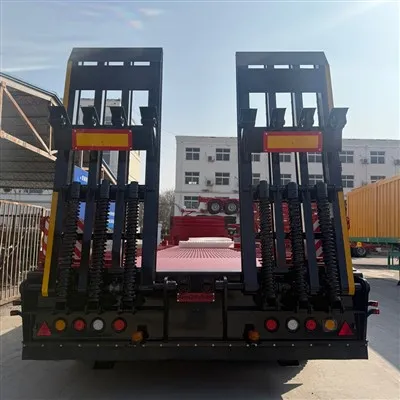
First off, let’s start with the basics: what even counts as “off-road” here? It’s not just a dirt path with a few potholes, right? It’s uneven ground, loose gravel, mud pits, steep inclines, even rocky terrain where paved roads end. Most standard flatbed trailers you see on highways are built for smooth asphalt—their suspension is set up for steady speed, their tires are for pavement, and their frames aren’t reinforced to handle constant jostling from rough ground. But that doesn’t mean every flatbed is useless off-road. That’s where the “depends” part comes in, and as someone who’s been selling these things for 8 years now, that’s the answer everyone really needs instead of a vague yes or no.
Let’s talk about the make or break parts here, because this isn’t guesswork—this is stuff I’ve seen firsthand when clients test our trailers out on a local logging trail last summer. First up: the frame. Standard highway flatbeds use a “channel frame” that’s lightweight for fuel efficiency, but it flexes like a cheap soda can when you hit a big rock at 5 mph off-road. Off-road-capable flatbeds? We build them with heavy-duty “I-beam frames” that are thicker, stiffer, and can handle twist from uneven terrain. I remember one client tried to use a standard flatbed to haul lumber to a remote cabin, and halfway there, the frame twisted so bad the stakes bent right off. That’s the kind of headache we’re here to help you avoid.
Next, suspension. Highway flatbeds usually have leaf springs that are soft for a smooth ride on pavement, but they bottom out instantly when you hit a mud rut off-road. Off-road setups? We switch to heavy-duty leaf springs with more leaves, or even air suspension with locking features, but wait—don’t go thinking air suspension is always better. If you’re hauling super heavy gear (like construction equipment, which is 20k+ lbs), air suspension can bounce around too much. We have one model that’s got a combination: heavy-duty leaf springs for load support and a small secondary air bag to take the edge off small bumps. It’s a game-changer for guys who bounce between jobs that are on pavement and jobs that are off.
Tires and wheels are another big one. Standard highway tires have a smooth tread that’s great for traction on roads but slides all over loose gravel or mud. Off-road flatbeds need deep, aggressive treads—think mud-terrain or all-terrain tires, not the cheap bias-ply tires you get with a basic trailer. Also, steel wheels instead of aluminum? Steel takes a hard hit from rocks without bending, which aluminum will do every single time. Last month, a construction client called us panicking because his aluminum wheel bent on a rock, and he was stuck for 4 hours waiting for a tow. The steel wheels on our off-road flatbeds? We’ve had clients run them for 2 years straight through rocky jobs, and only one tiny dent—no replacements needed.
But wait, let’s be real: even a top-of-the-line off-road flatbed isn’t a rock crawler. I’ve had a client try to take our off-road flatbed through a deep mud pit that was meant for a 4×4 truck, not a trailer. The trailer got stuck, and we had to send a winch out to pull it out. So there are limits. It works when the off-road terrain is manageable—like dirt access roads, gravel sites, farm fields, or even light rocky trails. If you’re trying to go where only ATVs can, you’re gonna need a different setup. That’s why we always ask clients specific questions: where are you hauling this? How heavy is the load? What’s the terrain like? No one size fits all, and we’re not gonna sell you a trailer that’s wrong for your job.
Now, let’s talk about the secret stuff that no one tells you—maintenance. Off-road use beats up a trailer way faster than highway use, so if you’re gonna run your flatbed off-road, you gotta keep up with it. After every off-road trip, hose off the mud and gravel from the frame, wheels, and undercarriage—mud has salt sometimes, even on dirt jobs, and that eats at metal. Check the tire pressure every time; loose gravel can cause blowouts if pressure is wrong, and mud can cause flats if you’re dragging the trailer through thick muck. Also, grease the u-joints and suspension points way more often—once a month if you’re running off-road weekly, not just once a quarter like highway trailers. We include a quick maintenance checklist with every off-road flatbed we sell, because we don’t want you to have a breakdown because you skipped a grease job.
Wait, let’s hear from a client who’s actually lived this. Last year, a local logging company switched from using regular flatbeds to our off-road model. Before that, they were replacing two flatbeds a year because of frame twists and broken tires. Now, they’ve been using three of our trailers for 18 months, and only one minor wheel scuff. The owner told me, “It’s the first time we’ve had a trailer that doesn’t leave us stranded on a mountain road halfway through a haul.” That’s the stuff that makes this job worth it—helping people stop losing time and money because their trailer isn’t built for the job.
But what if you already have a flatbed and don’t want to buy a new one? Can you modify it for off-road? Short answer: sometimes, but it’s not worth it for most people. If your frame is standard, you can’t really reinforce it enough without costing almost as much as a new off-road flatbed. You can swap to off-road tires and steel wheels, and upgrade the suspension springs, but even then, it’s gonna be weaker than a purpose-built off-road trailer. I’ve seen guys try to “MacGyver” a regular flatbed with extra supports, and it ended up snapping on a steep hill. Save yourself the hassle—if you’re gonna run off-road, get a trailer that’s built for it.
Now, let’s wrap this up with what it all means for you, whether you’re a contractor, farmer, logger, or anyone who needs to haul heavy stuff off the beaten path. A flatbed trailer can 100% be used in off-road conditions—if you get the right one. It’s not about saying yes or no; it’s about matching the trailer to your specific job. We’ve got models for light off-road (like farm fields, small gravel sites) and heavy-duty off-road (mountain logging, construction on remote job sites). No cheap junk, no overpaying for stuff you don’t need.
If you’re tired of trailers that get stuck, break, or leave you stranded, hit us up to chat. We’ll walk through your hauling needs, terrain, and budget, no pressure, no sales pitch that feels like a used car lot. We’re here to make sure you get the trailer that works for you, not the other way around.
Don’t waste another trip with a trailer that’s not built for the job—let’s connect and find your perfect fit.
Dump Truck References
- National Association of Trailer Manufacturers. (2022). Off-Road Trailer Design Guidelines: Load Capacity and Terrain Compatibility.
- Construction Equipment Guide. (2023). Heavy-Duty Trailer Suspension Performance in Rough Terrain.
- U.S. Department of Agriculture. (2021). Agricultural Trailer Use in Rural Off-Road Conditions: Best Practices.
Shandong Huayuanda Automobile Manufacturing Co., Ltd.
As one of the most experienced flatbed trailer manufacturers and suppliers in China, our products have good reputation in the market. We warmly welcome you to buy high quality flatbed trailer at low price from our factory. If you have any enquiry about cooperation, please feel free to email us.
Address: Industrial Park, Quanpu Town, Liangshan County, Jining City, Shandong Province
E-mail: Huayuanda2024@163.com
WebSite: https://www.hydtrailer.com/
