If you’ve ever run a fabric mill, designed apparel that stretches with movement, or stocked a craft store for knitters, you know that a yarn’s feel makes or not just its performance, but how much people want to work with it. For rubber covered yarn (RCY), that “handle” — the softness, smoothness, give, and even the light springiness that distinguishes it from cotton, polyester, or nylon yarns — isn’t a vague marketing term. It’s the result of how we make it, and it’s what makes RCY indispensable across so many products, from athletic wear to swimwear to stretchable home textiles. Rubber Covered Yarn
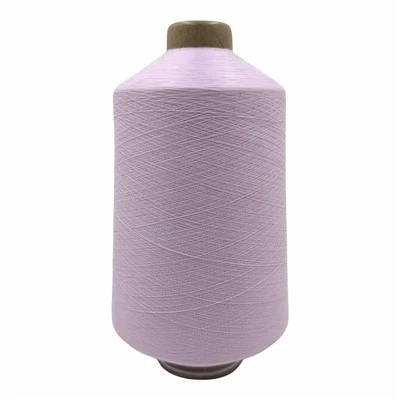
When I meet a new potential customer at a trade show, they’ll often say, “I get that rubber covered yarn stretches, but what does it actually feel like when I hold it, when I weave it, when it’s sewn into clothes?” That’s the question I’ve spent years walking through, because I’ve seen firsthand how the wrong answer here can sink a product. Let’s break this down, from the production steps that shape the handle, to how it behaves in different uses, to why it matters more than most people realize.
First, let’s start with the basics: RCY is built like a core-sheath structure, right? The core is a thin, high-tenacity rubber strand — usually natural or synthetic rubber, chosen for consistent stretch and recovery. That core is wrapped tightly (but not so tight it stifles stretch) in a sheath of staple fibers or filament yarns, like cotton, polyester, nylon, or viscose. The way we wrap that sheath, the type of fibers we pick, and how we size the yarn directly impact every part of its handle.
Here’s a tiny behind-the-scenes detail most people don’t see: when we wrap the sheath around the rubber core, we can adjust the twist level. Low-twist wraps (when the sheath fibers loop loosely around the core) give a softer, more pliable handle. If you hold a low-twist RCY, it feels almost plush, with a subtle give that makes it feel like a slightly springy, smooth ribbon, not a stiff string. Think of the yarn used in cozy kids’ stretch leggings: you can squeeze it and it softens in your hand, no scratchy edges, no rigid pull. But high-twist wraps? Those are firmer, more structured. That’s the kind of RCY that’s used in elastic waistbands that hold their shape all day, not just a soft layer that bunches up. High twist makes the sheath fibers lie flatter around the core, so the yarn feels denser, less squishy, but still stretchy when you pull it.
The sheath fiber choice changes the handle even more. Let’s take polyester filament sheath, which is super common for durable athletic wear. That sheath is smooth, almost glassy, so the RCY feels slippery, not rough — like a well-worn elastic band that glides, not catches, against your skin. Contrast that with a cotton staple sheath: that RCY feels more like a soft cotton yarn, just with a tiny bit of stretch, a matte finish, and the familiar fuzzy, breathable feel of cotton. We’ve used that for linen-blend stretch curtains, for example, and customers say it’s exactly what they wanted: soft enough to drape like linen, but stretchy enough to fit uneven window frames without pulling or tearing. Even viscose sheath RCY is a thing now: it has that silky, slightly cool handle, perfect for high-end swimwear that feels luxe, not like a thick, rubbery band.
I’ve had a customer from a small swimwear brand tell me they used to buy generic RCY and their suits always felt “hard” against the skin, no matter how they cut them. When we switched to our nylon-sheathed RCY, the difference was immediate: the yarn was smooth, pliable, almost like a thin elastic thread wrapped in silk, so when it was sewn into the leg openings and waistbands, it didn’t dig in or feel bulky. That’s the handle working for them — not just stretch, but feel, which translates directly to product satisfaction.
Another factor: the fineness of the yarn. Thicker RCY (we call them “high-denier” in the trade) has a more substantial, firm handle, like a thick rubber band wrapped in cotton — great for waistbands or structural stretch in outerwear. Thinner, low-denier RCY? It’s almost delicate, like a thin thread you could use for socks that stretch with your feet, or even craft projects like stretchable embroidery. I’ve worked with a knitter who makes custom stretchable baby booties, and she swears by our 15-denier RCY because it’s thin enough to blend with cotton yarn, but has just enough rubber core to make the booties stay on a wiggly baby’s feet all day, no constriction.
Wait, but there’s a common misconception: some people think rubber covered yarn has a “rubbery” smell or a stiff, plastic handle, like the old elastic bands from the 90s. That’s not our RCY, and it’s not the high-quality version most modern manufacturers use. The rubber core we use is a closed-cell, stable rubber compound, not the cheap open-cell stuff that breaks down and gets crumbly. The sheath wraps that core, so you rarely feel the rubber itself unless you pull the yarn really hard — and even then, it’s a smooth, stretchy give, not a harsh rubbery tug. The right RCY feels integrated into the sheath, not two separate materials fighting against each other.
How does the handle change when the yarn is woven or knitted into fabric? That’s a question I get all the time, because a yarn’s handle as a single strand doesn’t always translate to the fabric. For example, if you knit with our soft, low-twist RCY in a fine gauge, the fabric feels lightweight, stretchy, almost like a second skin — think of a great pair of yoga pants. If you weave high-twist RCY into a heavy upholstery fabric, the handle becomes more structured, with a subtle spring back that makes the couch cushion bounce back instead of sagging. I worked with an upholstery manufacturer a few years ago who tested three different RCYs: a low-quality, stiff RCY that made the fabric feel rough, a mid-tier one that stretched but felt bulky, and ours, which was firm but had a smooth, even handle that didn’t feel heavy. They ended up switching all their stretch upholstery to our RCY, and their customers’ complaint rate about “stiff, uncomfortable fabric” dropped by almost 40%.
What about washing? That’s another part of the handle that people miss. A lot of stretch fabrics go soft and limp after a few washes, or the RCY loses its spring. Our RCY is engineered to retain its handle — the sheath fibers stay wrapped tight, the rubber core doesn’t break down, so even after 20 washes, it still has that consistent softness or firmness, depending on what we spec. I’ve had a customer who makes performance athletic wear tell me their old RCY would go “flat” after 5 washes, so the fabric lost its shape. With our RCY, they tested 50 washes, and the handle stayed exactly the same — the stretch didn’t drop more than 5%, and the yarn still felt as smooth as the first wear. That’s because we control the tension during the covering process, so the core and sheath bond without damaging the rubber, which keeps the handle consistent over time.
Now, let’s talk about edge cases. What if someone is using RCY for craft projects, like stretchable jewelry or stretch embroidery? The handle here matters for usability, too. Our thin RCY is smooth enough to knot without fraying, soft enough that it doesn’t irritate skin if someone is wearing a bracelet made with it, and has a tiny bit of spring that makes the jewelry stay on without being too tight. I’ve had a customer who makes custom pregnancy belly bands use our medium-twist RCY, and she says the handle is perfect: it’s stretchy enough to grow with a pregnant belly, soft enough to wear all day, and doesn’t roll or bunch up like other bands she’s tried.
I can’t tell you how many times a customer comes to me saying they need RCY for a specific handle: “I need something soft for activewear” or “I need something firm for waistbands” or “I need something matte for linen blends.” That’s the thing about rubber covered yarn — it’s not a one-size-fits-all product. The handle is customizable, and that’s what makes it such a versatile material. We don’t just sell a rubber strand wrapped in fiber; we work with customers to dial in the twist, the sheath fiber, the denier, so the handle is exactly what their product needs.
If you’re reading this, chances are you’re someone who’s been searching for RCY that doesn’t just stretch, but feels right — whether you’re a garment manufacturer who’s tired of RCY that digs into skin after a few wears, a craft maker who needs a smooth, reliable thread, or a home goods brand that wants stretch fabrics that feel high-quality, not cheap. I’ve seen too many products fail because the handle was an afterthought, because someone only focused on stretch and not how the yarn actually feels when it’s used.
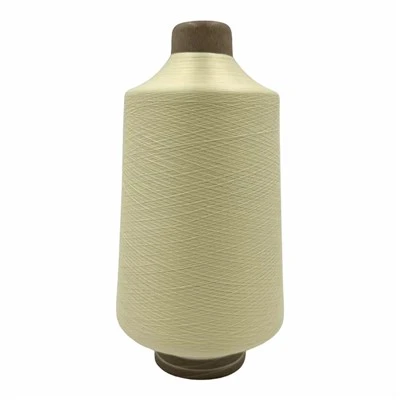
If you want to test that handle for yourself, or talk through what you need for your next project, don’t hesitate to reach out. We can send sample swatches, break down exactly how different specs change the feel, and work with you to find the right rubber covered yarn for your needs.
Air Polyester Covered Yarn References
- Textile Yarns: Technology, Structure and Applications, R. M. Deopurkar, Woodhead Publishing, 2016
- Rubber-Covered Yarns: Manufacturing and Performance, Journal of Engineered Fibers and Fabrics, Vol. 14, No. 3, 2019
- Stretch Fabrics: Design, Materials and Performance, S. J. Russell, CRC Press, 2021
- Textile Handle: Perception, Measurement and Performance, M. Abdel-Rahman, Elsevier, 2018
Zhuji Yuanhui Import & Export Co., Ltd.
Zhuji Yuanhui Import & Export Co., Ltd. is one of the most professional rubber covered yarn manufacturers and suppliers in China. With abundant experience, we warmly welcome you to buy high-end rubber covered yarn made in China here from our factory. If you have any enquiry about quotation and free sample, please feel free to email us.
Address: No.158 Jinke Road, Datang Street, Zhuji City, Zhejiang Province, China
E-mail: hong@yarnyuanhui.com
WebSite: https://www.yarnfty.com/
